L’atrophie multisystémique (AMS) est un trouble neurologique dégénératif rare qui affecte les fonctions involontaires (autonomes) de votre corps, notamment la pression artérielle, la respiration, la fonction vésicale et le contrôle moteur.
Anciennement appelé syndrome de Shy-Drager, atrophie olivopontocérébelleuse ou dégénérescence striatonigrale, l’atrophie multisystémique (AMS) partage de nombreux symptômes semblables à ceux de la maladie de Parkinson, tels que des mouvements lents, des muscles rigides et un mauvais équilibre.
Le traitement comprend des médicaments et des changements de mode de vie pour aider à gérer les symptômes, mais il n’y a pas de remède. La maladie progresse et conduit finalement à la mort.
Symptômes de l’atrophie multisystémique
L’AMS affecte de nombreuses parties de votre corps. Les symptômes se développent généralement à l’âge adulte, généralement dans les années 50 ou 60.
L’AMS est classée en deux types : parkinsonien et cérébelleux. Le type dépend des symptômes que vous présentez au moment du diagnostic.
Type parkinsonien
C’est le type d’AMS le plus courant. Les signes et symptômes sont similaires à ceux de la maladie de Parkinson, tels que :
Muscles rigides
Difficulté à plier les bras et les jambes
Mouvement lent (bradykinésie)
Tremblements (rares dans l’AMS)
Problèmes de posture et d’équilibre
Type cérébelleux
Les principaux signes et symptômes sont des problèmes de coordination musculaire (ataxie), mais d’autres peuvent inclure :
Mouvements et coordination altérés, tels qu’une démarche instable et une perte d’équilibre
Troubles visuels, tels qu’une vision floue ou double et une difficulté à fixer vos yeux sur quelque chose.
Difficulté à avaler (dysphagie) ou à mâcher
Signes et symptômes généraux
De plus, le signe principal de l’atrophie multisystémique est :
Hypotension orthostatique, une forme d’hypotension artérielle qui provoque des étourdissements, voire un évanouissement, lorsque vous vous levez d’une position assise ou couchée
Vous pouvez également avoir des niveaux de tension artérielle dangereusement élevés en position couchée.
L’atrophie multisystémique peut causer d’autres difficultés avec les fonctions corporelles involontaires (autonomes), notamment :
Dysfonctionnement urinaire et intestinal
Constipation
Perte de contrôle de la vessie ou des intestins (incontinence)
Anomalies de la transpiration
Réduction de la production de sueur, de larmes et de salive
Intolérance à la chaleur due à une transpiration réduite
Contrôle de la température corporelle altéré, provoquant souvent des mains ou des pieds froids
Les troubles du sommeil
Sommeil agité
Respiration anormale nocturne
Dysfonction sexuelle
Incapacité à obtenir ou à maintenir une érection (impuissance)
Perte de libido
Problèmes cardiovasculaires
Changements de couleur dans les mains et les pieds causés par une accumulation de sang
Mains et pieds froids
Problèmes psychiatriques
Difficulté à contrôler ses émotions, comme rire ou pleurer de manière inappropriée
Causes de l’atrophie multisystémique
Il n’y a aucune cause connue pour l’atrophie multisystémique (AMS). Certains chercheurs étudient une composante héréditaire possible ou l’implication d’une toxine environnementale dans le processus de la maladie, mais il n’y a aucune preuve substantielle pour étayer ces théories.
Le MSA provoque une détérioration et un rétrécissement (atrophie) de parties de votre cerveau (cervelet, noyaux gris centraux et tronc cérébral) qui régulent les fonctions internes du corps, la digestion et le contrôle moteur.
Au microscope, le tissu cérébral endommagé des personnes atteintes d’AMSmontr e des cellules nerveuses (neurones) qui contiennent une quantité anormale d’une protéine appelée alpha-synucléine. Certaines recherches suggèrent que cette protéine peut être surexprimée dans l’atrophie multisystémique.
Complications
La progression de l’AMS varie, mais la condition n’entre pas en rémission. Au fur et à mesure que le trouble progresse, les activités quotidiennes deviennent de plus en plus difficiles.
Les complications possibles comprennent :
Anomalies respiratoires pendant le sommeil
Blessures dues à des chutes causées par un mauvais équilibre ou un évanouissement
Immobilité progressive pouvant entraîner des problèmes secondaires tels qu’une dégradation de l’état votre peau
Perte de capacité à prendre soin de soi dans les activités quotidiennes
Paralysie des cordes vocales, qui rend la parole et la respiration difficiles
Les gens vivent généralement environ sept à dix ans après l’apparition de plusieurs symptômes d’atrophie systémique. Cependant, le taux de survie avec l’atrophie multisystémique varie considérablement. Parfois, les gens peuvent vivre pendant 15 ans ou plus avec la maladie. La mort est souvent due à des problèmes respiratoires.
Comment diagnostiquer l’atrophie multisystémique
Le diagnostic de l’atrophie multisystémique peut être difficile. Certains signes et symptômes de l’AMS – tels que la rigidité musculaire et la démarche instable – se produisent également avec d’autres troubles, tels que la maladie de Parkinson, ce qui rend le diagnostic plus difficile. L’examen clinique, avec divers tests et des examens d’imagerie, peut aider votre médecin à déterminer si le diagnostic d’AMS est probable ou possible.
En conséquence, certaines personnes ne sont jamais correctement diagnostiquées. Cependant, les médecins sont de plus en plus conscients de la maladie et sont plus susceptibles d’utiliser un examen physique et des tests autonomes pour déterminer si le MSA est la cause la plus probable de vos symptômes.
Si votre médecin soupçonne une atrophie multisystémique, il obtiendra des antécédents médicaux, effectuera un examen physique et demandera éventuellement des analyses de sang. Les scintigraphies cérébrales, telles qu’une IRM , peuvent montrer des signes qui peuvent suggérer une AMS et également aider à déterminer s’il existe d’autres causes qui peuvent contribuer à vos symptômes.
Vous pouvez recevoir une référence à un neurologue ou à un autre spécialiste pour des évaluations spécifiques qui peuvent aider à poser le diagnostic.
Test de table inclinable
Ce test peut aider à déterminer si vous avez un problème de contrôle de la pression artérielle. Dans cette procédure, vous êtes placé sur une table motorisée et attaché en place. Ensuite, la table est inclinée vers le haut de sorte que votre corps soit positionné à un angle de 70 degrés.
Pendant le test, votre tension artérielle et votre fréquence cardiaque sont surveillées. Les résultats peuvent évaluer à la fois l’étendue des irrégularités de la pression artérielle et si celles-ci se produisent pendant un changement de position physique.
Tests pour évaluer les fonctions autonomes
Les médecins peuvent prescrire d’autres tests pour évaluer les fonctions involontaires de votre corps, notamment :
Mesure de la tension artérielle, couché et debout
Un test pour évaluer la transpiration
Des tests pour évaluer votre fonction vésicale et intestinale
Électrocardiogramme pour suivre les signaux électriques de votre cœur
Si vous avez des troubles du sommeil, en particulier une respiration interrompue ou des ronflements, votre médecin peut vous recommander une évaluation dans un laboratoire du sommeil. Cela peut aider à diagnostiquer un trouble du sommeil sous-jacent et traitable, comme l’apnée du sommeil.
Quelqu’un est considéré comme ayant une syncope s’il perd connaissance et devient sans force, puis se rétablit rapidement.
Pour la plupart des gens, la syncope survient de temps en temps, voire jamais, et n’est pas un signe de maladie grave.
Cependant, dans d’autres cas, elle peut être le premier et le seul signe avant-coureur d’un épisode de mort subite d’origine cardiaque.
ELLE peut également entraîner des blessures graves.
La pré-syncope est le sentiment que vous êtes sur le point de vous évanouir. Une personne peut avoir des étourdissements ou des nausées, avoir une « grisaille » dans les yeux ou des difficultés à entendre, avoir des palpitations ou se sentir faible ou être soudainement en sueur.
La perte de connaissance provoquée par une convulsion, une crise cardiaque, un traumatisme crânien, un accident vasculaire cérébral, une intoxication, un coup à la tête, une hypoglycémie diabétique ne sont pas considérées comme une syncope.
Une personne qui s’évanouit doit s’allongre pour permettre au sang de circuler vers le cerveau.
Qu’est-ce qui cause la syncope ?
La syncope survient lorsqu’il n’y a pas assez de flux sanguin vers le cerveau. Il existe de nombreuses causes potentielles, mais les plus courantes sont :
Si l’évanouissement se produit fréquemment et n’est pas dû à une déshydratation ou à un changement postural soudain, vous devrez peut-être subir un test de dépistage d’une maladie cardiaque ou vasculaire grave. La syncope cardiaque survient souvent soudainement, sans vertiges ni autres symptômes pré-syncopes.
Causes courantes de syncope cardiaque :
Rythme cardiaque anormal : Pendant les épisodes d’arythmie cardiaque, le cœur fonctionne de manière inefficace et une quantité insuffisante de sang oxygéné peut circuler vers le cerveau. Il existe de nombreux types d’arythmies cardiaques qui peuvent provoquer une syncope. Ceux-ci incluent les bradyarythmies (le cœur bat trop lentement) et les tachyarythmies (le cœur bat trop vite).
Dissection aortique : déchirure de la grosse artère qui transporte le sang du cœur vers le reste du corps. Il s’agit d’une maladie très rare mais potentiellement mortelle.
Sténose valvulaire aortique : rétrécissement de la valve entre le cœur et l’aorte. La sténose valvulaire aortique peut être congénitale ou se développer à un âge avancé.
Syncope réflexe
La syncope réflexe est le résultat d’une réponse réflexe à un déclencheur, au cours de laquelle le cœur ralentit du fait que les vaisseaux sanguins se dilatent (s’élargissent). Cela fait chuter la pression artérielle, donc moins de sang circule vers le cerveau et un évanouissement. La syncope réflexe est la cause la plus fréquente d’évanouissement.
La syncope vasovagale se produit dans un tiers de la population. C’est de loin la forme la plus courante de syncope réflexe. La syncope vasovagale est souvent déclenchée par une combinaison de déshydratation et de posture droite. Mais il peut aussi avoir un déclencheur émotionnel tel que le fait de voir du sang.
Quelques déclencheurs de syncope vasovagale
Voir du sang (pas considéré comme un symptôme grave)
Recevoir une injection ou faire une prise de sang (pas considéré comme grave)
Se lever rapidement
Rester debout longtemps
Traumatisme, stress ou douleur soudains et inattendus
Les autres types de syncope réflexe comprennent :
Syncope situationnelle , une réponse réflexe soudaine à un déclencheur autre que ceux énumérés ci-dessus. Les déclencheurs incluent :
Tousser, éternuer, rire, avaler
Pression sur la poitrine après un effort ou un exercice
déféquer
Uriner debout
Prendre un repas
Douleur abdominale soudaine
Souffler dans un instrument en cuivre
soulever des poids
Syncope du sinus carotidien, une réponse chez les personnes âgées qui se produit lorsqu’une pression est appliquée sur l’artère carotide dans le cou.
Hypotension orthostatique
L’hypotension orthostatique (en position verticale) peut également provoquer des évanouissements, car le sang a du mal à aller contre la gravité pour atteindre le cerveau. L’hypotension orthostatique est fréquente chez les personnes âgées et est souvent exacerbée par la déshydratation ou des médicaments qui abaissent la tension artérielle, comme les diurétiques. Moins fréquemment, l’hypotension orthostatique peut être causée par une affection neurologique telle que la maladie de Parkinson ou l’atrophie multisystémique, anciennement connue sous le nom de syndrome de Shy-Drager.
Syndrome de tachycardie orthostatique posturale (POTS)
Le syndrome de tachycardie orthostatique posturale (augmentation de la fréquence cardiaque en position debout), ou POTS, est un syndrome clinique rare caractérisé par une augmentation de la fréquence cardiaque d’au moins 30 battements par minute en position debout et une intolérance orthostatique – lorsque la position debout provoque des symptômes tels que des palpitations, des vertiges et lassitude. Le traitement consiste généralement à augmenter l’apport en sel et en liquide, à pratiquer des exercices en position couchée. Le syndrome de tachycardie orthostatique posturale ne s’aggrave généralement pas avec l’âge.
Comment diagnostique-t-on la syncope ?
Il est important d’identifier la cause de la syncope, si possible, pour exclure une maladie cardiaque dangereuse. Selon vos symptômes et circonstances, les tests suivants peuvent être utilisés pour trouver la cause :
Électrocardiogramme.
Test d’effort à l’effort.
Echocardiogramme : échographie du cœur.
Examen physique.
Mesure de la fréquence cardiaque et de la pression artérielle en réponse à une inclinaison verticale, qui simule une station debout prolongée
Étude électrophysiologique : test qui examine l’activité électrique du cœur de l’intérieur.
A domicile
Moniteur Holter : un ECG portable que vous portez en continu pendant un à sept jours pour enregistrer vos rythmes cardiaques au fil du temps
Comment la syncope est-elle traitée ?
Le traitement de la syncope dépendra de l’affection sous-jacente, mais peut inclure :
Ablation par cathéter : procédure pour cautériser les cellules cardiaques spécifiques qui causent des rythmes cardiaques anormaux.
Stimulateurs cardiaques : appareil inséré sous la peau sous la clavicule pour délivrer des impulsions électriques régulières à travers des fils minces et très durables attachés au cœur.
Défibrillateur implantable : un petit appareil implanté qui délivre une impulsion électrique au cœur pour réinitialiser un rythme cardiaque dangereusement irrégulier ; souvent utilisé pour traiter la tachycardie ventriculaire ou l’insuffisance cardiaque.
Une recherche a exploré le lien entre l’apnée du sommeil et la dépression et qui suggère que le premier pourrait être l’une des raisons de l’échec des traitements contre la dépression.
Traiter l’apnée du sommeil avec une machine pourrait réduire les symptômes de dépression.
Une nouvelle recherche indique que l’apnée obstructive du sommeil pourrait être un facteur responsable de la dépression réfractaire au traitement et suggère que le dépistage et le traitement de la condition de sommeil pourraient atténuer les symptômes de la dépression.
Le docteur William V. McCall, directeur du département de psychiatrie et de comportement lié à la santé du Medical College of Georgia de l’Université Augusta, est le premier auteur de l’étude.
Personne ne parle de l’évaluation de l’apnée en tant que cause potentielle de la dépression résistante au traitement, qui survient chez environ 50% des personnes atteintes d’un trouble dépressif majeur.
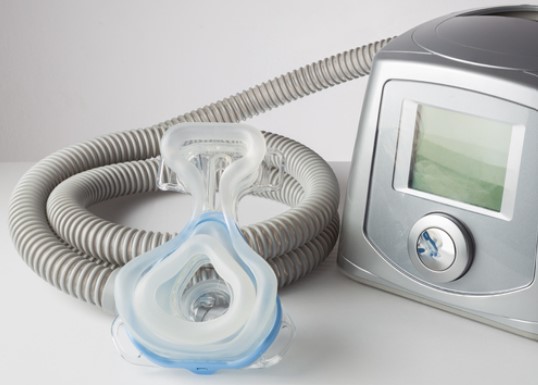
Les appareils CPAP traitent l’apnée du sommeil en fournissant de l’air oxygéné dans vos voies respiratoires à travers un masque et un tube.
14% des personnes avec dépression avaient un syndrome d’apnée
Le Dr McCall et son équipe ont examiné le taux d’apnée non diagnostiqué dans le cadre d’un essai clinique randomisé auprès de personnes présentant un trouble dépressif majeur et des tendances suicidaires.
Ils ont recruté 125 personnes souffrant de dépression, à l’origine dans le but de déterminer si le traitement de leur insomnie améliorerait leurs symptômes de dépression.
L’essai initial excluait les personnes à risque de syndrome d’apnée, telles que les somnifères, les personnes obèses ou atteintes du syndrome des jambes sans repos.
Les scientifiques ont testé les participants avec une étude du sommeil et ont découvert que 17 sur 125 (près de 14%) souffraient de syndrome d’apnée.
Le Dr McCall et ses collègues ont noté que les personnes atteintes de syndrome d’apnée ne présentaient pas les indicateurs habituels tels que la somnolence diurne. En outre, 6 des 17 personnes étaient des femmes non obèses.
Cela contraste avec le profil démographique habituellement à risque de syndrome d’apnée, à savoir des hommes en surpoids.
En outre, 52 des 125 participants avaient une dépression résistante au traitement; 8 personnes souffrant de dépression réfractaire au traitement avaient également un syndrome d’apnée.
Options futures de traitement
Les chercheurs soulignent que les maladies sous-jacentes,
telles que l’hypothyroïdie, le cancer et la maladie de l’artère carotide,
peuvent souvent être à l’origine d’une dépression résistante au traitement.
Par conséquent, de nombreuses personnes souffrant de
dépression subissent une série de tests invasifs et coûteux afin de déterminer
la cause de l’échec du traitement de la dépression.
Ces tests peuvent inclure une IRM ou même une ponction lombaire – mais le Dr McCall et son équipe recommandent d’abord des tests du sommeil. « Avant de faire une ponction lombaire contre la dépression réfractaire au traitement, nous aurions peut-être besoin de faire un test du sommeil », dit-il.
« Nous savons que les personnes souffrant d’apnée du sommeil parlent de symptômes de dépression », poursuit-il. « Nous savons que si vous faites de l’apnée, vous n’allez pas bien réagir à un antidépresseur. »
« Nous savons que si vous souffrez d’apnée du sommeil et bénéficiez d’une machine, les choses s’améliorent et nous savons maintenant qu’il existe des cas cachés d’apnée du sommeil chez des personnes avec dépression et idées suicidaires. », poursuit le Dr. William V. McCall.
Cependant, les auteurs de l’étude reconnaissent également
que d’autres facteurs, tels que les effets indésirables d’autres médicaments,
notamment les bêta-bloquants et les corticostéroïdes, peuvent provoquer une
dépression résistante au traitement.
Ils soulignent également que les tendances suicidaires sont également un facteur clé, et les chercheurs se demandent si le traitement de l’apnée du sommeil réduira également les idées suicidaires.
Source: McCall W. et coll. Prevalence of obstructive sleep apnea in suicidal patients with major depressive disorder. Journal of Psychiatric research. Volume 116, September 2019, Pages 147-150
La thérapie cognitivo-comportementale pour l’insomnie aide à prévenir la dépression majeure
La thérapie cognitivo-comportementale pour l’insomnie prévient la dépression majeure chez les personnes âgées souffrant d’insomnie, selon une étude publiée en ligne le 24 novembre 2021 dans JAMA Psychiatry.
Les chercheurs ont découvert qu’une dépression majeure s’était produite chez 19 participants (12,2%) dans le groupe ayant suivi le thérapie comportementale (TCC) et chez 35 participants (25,9%) du groupe ayant suivi une thérapie classique contre le sommeil. Chez les participants ayant suivi la TCC, la rémission du trouble de l’insomnie se maintient.
Les psychostimulants sont des molécules utilisées dans la traitement du déficit de l’attention avec ou sans hyperactivité (TDAH) chez les enfants, adolescents et adultes.
Il existes deux familles de psychostimulants : l’amphétamine et le méthylphénidate (Ritalin, Concerta) dont la structure est symétrique.
Les amphétamines et le méthylphénidate sont à courte ou longue action.
Mécanismes d’action des psychostimulants
Les psychostimulants sont des inhibiteurs de la recapture de la dopamine, ce qui provoque une augmentation de ce neurotransmetteur dans le cerveau.
Cette augmentation de la dopamine serait à l’origine de la diminution des symptômes du TDAH.
Le méthylphénidate
C’est un psystimulant du système nerveux central utilisé le plus souvent dans le traitement du trouble déficitaire de l’attention/hyperactivité (TDAH) et de la narcolepsie.
Également connu sous le nom de produits commercialisés Ritalin, Concerta ou Biphentin, le méthylphénidate est utilisé avec d’autres modalités de traitement pour diminuer les symptômes suivants : distractibilité modérée à sévère , courte durée d’attention, hyperactivité, labilité émotionnelle et impulsivité.
Les formulations à action prolongée de psychostimulants tels que le méthylphénidate sont considérés comme le traitement le plus efficace et le plus largement utilisé contre les symptômes du TDAH, et sont considérés comme des options de première intention pour les enfants, les adolescents et les adultes.
Bien que son mécanisme exact ne soit pas clair, il a été démontré que le méthylphénidate (MPH) agit comme un inhibiteur de la recapture de la noradrénaline et de la dopamine, augmentant ainsi la présence de ces neurotransmetteurs dans l’espace extracellulaire et prolongeant leur action.
Il existe un effet dose-dépendant des psychostimulants sur la stimulation des récepteurs, où des doses plus élevées augmentent la libération de noradrénaline et de dopamine dans toutes les parties du cerveau, ce qui peut entraîner une altération de la cognition et une activation de la locomotion.
En revanche, de faibles doses activent sélectivement les neurotrasmetteurs dans le cortex préfrontal, une zone du cerveau censée jouer un rôle important dans la pathologie du TDAH.
Le méthylphénidate peut avoir des effets d’addiction, probablement lié aux effets associés à des doses plus élevées de méthylphénidate. L’augmentation de la dopamine dans les zones clés du cerveau est associée aux propriétés addictives du méthylphénidate, et augmente les effets d’autres drogues addictives telles que les amphétamines, rendant les personnes souffrant de TDAH plus sensibles à leurs effets addictifs.
TDAH : aucun effet des psychostimulants sur le risque d’AVC
Les enfants recevant un médicament pour traiter leur déficit d’attention avec ou sans hyperactivité (TDAH) n’ont pas de risque accru d’être victimes d’un AVC.
Les résultats de cette étude ont été présentés à la Conférence de l’American Stroke Association’s International Stroke.
Cette étude a suivi pendant 14 ans 2,5 millions d’enfants âgés de 2 à 19 ans. Aucun effet du médicament sur la survenue d’un AVC n’a été rapporté.
Il est possible de modifier certains facteurs qui augmentent le risque de démence chez les personnes à risque souffrant de déficit (ou trouble) cognitif léger (DCL), selon une méta-analyse portant sur 62 études.
Parmi les facteurs qui augmentent le risque de développer une démence notons le diabète, le syndrome métabolique, de faibles niveaux d’acides foliques, les symptômes neuropsychiatriques et la dépression. A l’inverse, un régime de type méditérranéen diminue ce risque.
Tous ces facteurs de risque sont dits modifiables, c’est-à-dire que l’on peut agir sur ces facteurs pour les modifier (contrairement à l’âge et aux gènes qui sont des facteurs que l’on ne peut modifier).
« Le principal message est que faire attention à son alimentation et sa santé physique et mentale est la meilleure façon de lutter contre la démence, déclare Claudia Cooper, auteure principale de l’étude et chercheure à l’University College de Londres, qui rajoute que ce sont des mesures de bon sens que les professionnels de santé peuvent facilement mettre en pratique.
Il n’existe pas d’interventions fondées sur des données probantes pour les personnes atteintes de déficit cognitif léger, qui constituent une catégorie de plus en plus importante au fur et à mesure que la population vieillit.
« De plus en plus de gens sont diagnostiqués avec un trouble cognitif léger, et ils forment un groupe très motivé pour réduire leur risque de développer une démence. Donc nous voulions voir quel est le meilleur conseil que nous pourrions leur apporter », a t-elle ajouté.
Les chercheurs ont évalué des études longitudinales qui ont évalué les facteurs de risque modifiables. Parmi les études choisies, 17 étaient des études épidémiologiques et 45 des études cliniques.
Les résultats ont montré que la présence d’un diabète a augmenté de 65% le risque de développer la maladie d’Alzheimer chez les personnes avec un déficit cognitif léger. Fait intéressant, le fait de traiter son diabète a diminué de manière significative le risque de maladie d’Alzheimer, comparé à ceux qui n’étaient pas traités, suggérant que ce facteur de risque peut être modifié.
Les patients qui suivent un régime pauvre en produits laitiers et en viande, mais riche en poissons, fruits et légumes sont moins susceptibles de passer d’un état de déficit cognitif léger à celui d’Alzheimer.
La présence de facteurs neuropsychiatriques ou de faibles niveaux d’acide folique accroissent également le risque de démence. Quant à la présence de symptômes dépressifs, les résultats sont contradictoires.
Enfin, la consommation excessive d’alcool constitue un facteur de risque, contrairement à d’autres facteurs qui n’ont aucune influence néfaste (par ex. hypertension, hypercholestérolémie, tabagisme, consommation modérée d’alcool et faible niveau d’éducation).
Bien que le début d’apparition d’un déclin cognitif léger puisse être retardé chez ceux qui sont plus éduqués (comparés à ceux qui le sont moins), le facteur éducation ne retarde pas l’apparition de la démence une fois un diagnostic de déficit cognitive posé. Cette observation est conforme avec la théorie de la réserve cognitive.
Des questions restent en suspens, notamment celles concernant l’absence d’effets délétères du tabagisme et des symptômes dépressifs.
Source: Cooper C et coll. Modifiable predictors of dementia in mild cognitive impairment: a systematic review and meta-analysis. Am J Psychiatry. 2015 172:323-34.
Le trouble cognitif léger (ou déficit cognitif léger) n’est pas un état pathologique mais plutôt un terme désignant des personnes avec une altération modérée mais significative de leurs fonctions cognitives.
La notion de trouble cognitif léger (TCL) est la traduction anglaise de « mild cognitive impairment » ou « MCI » introduite en 1991 par des chercheurs américains (Flicker et coll. Mild cognitive impairment in the elderly: predictors of dementia. Neurology, 1991, 41:1006-1009).
Historique
Le concept de plaintes mnésiques apparaît dans les années soixante.
Kral et ses collaborateurs (1962) distingue l’oubli bénin provoqué par le vieillissement cérébral de l’oubli malin provoqué par une affection cérébrale.
La notion d’oubli bénin provoqué par le vieillissement cérébral correspond au terme anglo-saxon de age associated memory impairment (AAMI) qui définit une perte de la performance mnésique chez une personne âgée, comparée à celle d’un sujet plus jeune.
En 1991, Flicker et ses collaborateurs introduisent le concept de trouble cognitif léger (ou défici cognitif léger) en proposant les caractéristiques suivantes:
Plainte de mémoire, confirmée par les proches.
Les activités de la vie quotidienne sont normales.
Le fonctionnement cognitif est globalement normal.
Les performances cognitives sont anormalement basses pour l’âge.
Le sujet ne remplit pas les critères de démence.
En 1999, le clinicien américain Petersen définira les critères cliniques et parlera de déclin cognitif léger ou trouble cognitif léger.
Définition du trouble cognitif léger
Le « trouble cognitif léger » n’est pas un état pathologique mais plutôt un terme désignant un groupe de personnes qui présentent une altération modérée mais significative de leurs fonctions cognitives.
La majorité de ces personnes souffrent de troubles objectifs de la mémoire (c’est-à-dire validés par des tests dits neuropsychologiques).
C’est un niveau transitoire entre le vieillissement normal et la maladie d’Alzheimer débutante, ce qui signifie pas pour autant que les personnes souffrant de trouble cognitif léger développeront une maladie d’Alzheimer. En effet, certains présentent un retour à la normale de leurs performances.
Les critères du trouble cognitif léger
Le sujet se plaint de troubles mnésiques (de préférence corroborés par un proche).
Un examen neuropsychologique confirme que les performances mnésiques du sujet sont inférieures à celles d’un sujet « normal » du même âge.
Les fonctions cognitives du sujet sont préservées.
Le sujet est globalement autonome
Ce déclin doit être présent depuis au moins six mois.
Il exclut toute personne souffrant de dépression, d’idées délirantes, de retard mental, ou d’autres troubles psychiatriques.
Exemples de troubles de mémoire : la personne replace plus souvent les objets au mauvais endroit, utilise des pense-bêtes, répète souvent les mêmes questions, a du mal à gérer ses rendez-vous.
Les activités de base de la vie quotidienne sont préservées mais environ un tiers des patients présentent de légers troubles affectant les activités instrumentales complexes de la vie quotidienne.
Ces troubles ne sont pas significatifs, contrairement à ceux observés dans la démence. Par exemple, le patient souffrant de déclin cognitif léger (DCL en abrégé) a de la difficulté à préserver ses hobbies, gérer ses affaires personnelles nécessitant un effort intellectuel (par ex. déclaration d’impôt, comptabilité), utiliser un nouvel équipement. Elle a du mal à trouver ses mots, à conduire en sécurité, se laisse facilement distraire ou à préparer le dîner.
Il aura tendance à faire répéter les mêmes questions et a du mal à se souvenir de noms de personnes que l’on vient de lui présenter (sa mémoire verbale est en effet affectée).
La communauté médicale est divisée sur la définition de troubles significatifs des capacités fonctionnelles. Son défi sera d’évaluer avec précision ces subtils changements.
Un diagnostic de démence sera posé si la personne voit ses activités quotidiennes altérées et si d’autres fonctions cognitives sont affectées.
Ces critères ont été proposés par Peterson RC et coll. Curent concepts in mild cognitive impairment. Archives of Neurology, 2001, 58:1985-1992.
Prévalence
La prévalence se situe entre 10% et 20% chez les plus de 65 ans. Selon l’étude canadienne «Canadian Study of health and Aging», près de 17% des personnes âgées souffriraient de trouble cogniitf léger. Ce pourcentage est de 22% chez les Américains âgés de 71 ans et plus (Source: Annals of Internal Medicine 2008;148:427-434).
Selon une autre étude portant sur 12 000 jumeaux, le trouble cognitif léger toucherait 64% des personnes âgées de plus de 65 ans.
La prévalence est de 39% chez ceux dont le trouble est subjectif (c’est-à-dire ressenti par le plaignant ou l’entourage mais non validé par des tests), alors qu’il est de 25% lorsque la plainte cognitive est objective (c’est-à-dire confirmée par des tests).
Selon l’étude, le trouble cognitif léger (TCL) concerne la mémoire et l’attention.
Une autre étude souligne que les personnes souffrant de manière subjective de TCL sont avant tout des personnes ayant un niveau d’éducation élevé, le plus souvent mariées et vivant confortablement. Elle confirme que le faible niveau d’éducation a un impact négatif sur le fonctionnement cognitif.
Enfin, lorsqu’une personne âgée souffre d’un TCL, son frère jumeau (ou sa sœur jumelle) a un risque accru d’être atteinte.
Facteurs vasculaires
Une forte proportion de ces patients présentent des facteurs de risque vasculaires, en particulier une hypertension. La technique de neuroimagerie décèle dans certains cas des infarctus silencieux, qui amplifie le accélère la mort neuronale.
Si aucun signe avant-coureur de maladie d’Alzheimer n’apparaît chez ces patients, les cliniciens utilisent le terme de déclin cognitif vasculaire (en anglais « vascular cognitive impairment »).
Quels sont les liens entre le trouble cognitif léger et la démence ?
Plusieurs études indiquent que 10 à 15% des personnes atteintes de DCL « progressent » dans une année vers une démence de type Alzheimer.
Le diagnostic est donc d’un intérêt capital.
Il convient de noter que certaines personnes souffrant d’un DCL ne deviendront pas démentes (25% selon une étude canadienne) ou développeront un autre type de démence (par exemple une démence d’origine vasculaire ou associée à un syndrome parkinsonien), reflétant la nature hétérogène de cette catégorie de sujets.
Les patients souffrant de ce trouble représentent donc une catégorie de patients à risque de démence.
Une grande majorité (jusqu’à 60%) de ces patients qui ont par la suite développé une maladie d’Alzheimer était dépressive. La dépression est donc un signe prédictif chez cette catégorie de patients.
Partant du constat qu’il existe différents devenirs pour les patients présentant ce trouble, la communauté médicale s’est intéressée à d’autres formes de trouble cognitif léger, caractérisées par une atteinte de plusieurs domaines cognitifs et une préservation de la mémoire.
Dans un article publié en 2001, l’équipe du docteur Petersen définit les différents sous-types de trouble et leurs possibles étiologies:
Alors que le TCL simple domaine se définit par l’atteinte d’une seule fonction cognitive (par exemple la mémoire), le TCL multidomaine se caractérise par le déficit de plusieurs domaines cognitifs (langage, fonctions exécutives et habiletés visuo-spatiales) avec ou sans déficit mnésique.
En 2011, un institut national américain a défini les caractéristiques cliniques qui permettent de dire que la maladie d’Alzheimer est à l’origine d ‘un déclin cognitif léger chez une personne. Les voici :
Problèmes de mémoire persistants.
Le déclin de la cognition est progressif et non brutal (on parle de plusieurs mois à plusieurs années).
Absence d’hallucinations ou de troubles moteurs (caractérisques d’une démence à corps de Lewy).
Absence de facteurs de risques vasculaires ou de dommages vasculaires (l’hypothèse d’un déclin cognitif vasculaire est alors évoquée).
Absence de troubles importants du langage et du comportements (l’hypothèse d’une démence fronto-temporale est alors évoquée).
Comment dépister le trouble cognitif léger ?
Les différents tests neuropsychologiques permettent d’explorer les différents domaines cognitifs, ce qui permettra de déterminer les sous-types de trouble. Les principaux domaines cognitifs explorés sont la mémoire, le langage, les fonctions exécutives, l’attention et les capacités visuospatiales.
Mémoire. C’est principalement la mémoire épisodique qui est évaluée. Le Montreal Cognitive Assessment (MoCA) est un outil spécifique au dépistage du déclin cognitif léger. Les autres tests les plus utilisés sont les tests de rappel libre (RL) et rappel indicé (RI) selon la procédure de Grober et Buschke et le test de reconnaissance visuelle DSM 48. Ces tests permettront de déterminer s’il y a une atteinte de l’hippocampe (test de Grober et Buschke) et du cortex périrhinal (DSM 48). Les autres tests utilisés sont le test des portes et le test de mémoire logique de la MEM III. Le cortex temporal est impliqué dans la reconnaissance des visages et des objets.
Langage. Le test DO80 et les tâches de fluence verbale catégorielle et sémantique permettent de mettre en évidence un atteinte des aires de Broca et de de Wernicke.
Fonctions exécutives, attention et mémoire de travail. Le test de Stroop, le test des tracés et l’échelle d’intelligence de Wechsler sont souvent utilisés dans l’évaluation de l’attention et des fonctions exécutives. Pour rappel, un déficit des fonctions exécutives et de la mémoire de travail reflètent une atteinte du cortex préfrontal et pariétal.
Capacité visuospatiale. Le test de la figure de Rey et la batterie de tests de perception développés par Warington (visual and object space perception battery) permettent de dépister des agnosies visuelles et spatiales. Pour rappel, le cortex pariétal postérieur est impliqué dans la conscience spatiale.
Enfin, le mini-examen de l’état mental (MMSE) est d´une certaine utilité, mais manque de sensibilité. En revanche, le «Montreal Cognitive Assessment» et le «DemTect» semblent des tests prometteurs. Le «Montreal Cognitive Assessment» évalue le rappel différé, la fluence verbale, les habiletés visuospatiales, le calcul mental, l’orientation, l’attention, la concentration et les fonctions exécutives. Sa sensibilité, sa spécificité et sa valeur prédictive sont d´environ 90% (il existe 90% de risque qu´un sujet ayant obtenu un mauvais score à ce test soit atteint de DCL). Le «DemTect» est également un test précis et d´une très grande fiabilité.
Certains classes de médicaments peuvent entraîner des troubles cognitifs: il s’agit notamment des médicaments qui diminuent les niveaux d’acétylcholine dans le cerveau, les opiacés, les benzodiazépines, les hypnotiques, les antihistaminiques, les antidépresseurs tricycliques, les myorelaxants et les antiépileptiques.
De plus, l’hypotension liée à un traitement intensif de l’hypertension et une hypoglycémie associée à un traitement intensif du diabète peut également contribuer au déclin cognitif.
Diagnostic
Neuroimagerie
Il est maintenant admis que les tests neuropsychologiques et l’examen du cerveau par des techniques de neuroimagerie permettent non seulement:
de distinguer les personnes âgées ‘saines’ de celles ayant un trouble cognitif léger mais également,
d’identifier les sujets ayant une forte probabilité de développer une démence de type Alzheimer.
Les personnes souffrant de ce trouble présentent une dilatation plus rapide des ventricules (reflétant une perte neuronale) que les personnes saines du même âge, selon une étude ayant utilisé la technique d’imagerie par résonance magnétique (IRM) volumétrique.
Cette accélération peut être détectée deux ans avant l’apparition des premiers symptômes observés lors du DCL (Source: Neurology 2008;70:824-825,828-833).
D’autres changements ont également été mis en observé chez des patients DCL ayant développé par la suite une maladie d’Alzheimer: baisse du volume de l’hippocampe (le région cérébrale impliquée dans la mémoire), diminution de l’activité de certaines structures cérébrales (mise en évidence par la technique de tomographie par émission de positon), et dépôts de plaques amyloïde marquées par la molécule radioactive Pittsburgh Compound-B (technique de tomographie par émission de positon).
Certains marqueurs biologiques sont susceptibles d’identifier des personnes à risque: présence élevée des protéines amyloïde et tau dans le liquide céphalorachidien, présence de la mauvaise forme de la protéine apolipoprotéine (appelée apolipoprotéine 4), niveaux élevés d´homocystéine et de cholestérol LDL, et dysfonctionnement olfactif. Ces observations doivent être confirmées et ne sont utilisées qu’à des fins de recherche.
Tests de laboratoire
La mesure des niveaux de sels minéraux, de glucose, de calcium, des vitamines B6 et B12 et de la fonction thyroïdienne permet de les formes réversibles de déclin cognitif léger liées à une infection, une insuffisance rénale, une hypo- ou une hyperthyroïdisme, ou des niveaux anormaux de vitamines ou de sels minéraux.
Thérapie
Les patients avec un déficit cognitif léger et traités avec un inhibiteur de l’acétylcholinestérase (donépézil, galantamine, rivastigmine), n’ont pas moins de risque de développer une démence, comparés à ceux qui ne sont pas traités.
De plus, ces médicaments n’ont aucun effet bénéfique sur la cognition de ces patients. Ils ne sont donc pas recommandés dans le traitement du déclin cognitif léger.
Enfin, l’extrait de ginkgo biloba et une supplémentation en testostérone ne ralentissent pas le déclin cognitif léger.
Conseils pour traiter les patients avec un déficit cognitif léger
Hypertension : contrôle de la pression artérielle.
Diabète : contrôle de la glycémie. Evitez l’hypoglycémie sévère.
Prévention des AVC : Traitement aux statines si indiqué.
Présence d’une fibrillation auriculaire: traitement avec un anti-coagulant ou un antithrombique.
Éviter l’alcohol.
Exercer des activités physiques et mentales.
Arrêtez de fumer
Encourager les interactions sociales
Gérer ses affaires sur le plan personnel et patrimonial.
Conduire et se déplacer dans sa maison sans danger (évitez les chutes).
Faire un suivi de sa performance cognitive tous les six mois environ.
Références
Chertkow H et coll. Diagnosis and treatment of dementia: 3. Mild cognitive impairment and cognitive impairment without dementia. CMAJ. 2008 May 6;178(10):1273-85.
Gauthier S et coll. Mild cognitive impairment. Lancet. 2006 Apr 15;367(9518):1262-70.
Cas pratique
Mme J., âgée de 81 ans, souffrant d’hypertension et de l’hyperlipidémie, a consulté un neurologue car elle « oublie des choses qu’elle vient d’entendre ».
Mme J. et son mari ont commencé à noter des problèmes de mémoire bénins un an plus tôt et ont remarqué que ces problèmes progressaient lentement.
Son mari a remarqué que sa femme avait des difficultés à résoudre certains problèmes et à gérer son temps. Mme J. était facilement distraite et avait du mal à se rappeler des conversations récentes. Elle égarait des objets et passait beaucoup de temps à les chercher. Elle lisait moins qu’avant. Elle a demandé à plusieurs reprises comment effecteur certaines opérations sur son ordinateur et son téléphone cellulaire.
Son mari a signalé qu’elle ne prenait aucune initiative et que leur maison semblait plus désordonnée.
Elle avait de la difficulté à planifier le dîner et les mets qu’elle concoctait étaient moins sophistiqués.
Les deux n’ont rapporté aucun changement dans le langage ou la parole.
Elle a continué à conduire à proximité de son domicile sans faire d’accidents, mais avait de la difficulté à se souvenir de la direction à prendre pour aller dans des endroits familiers.
Mme J. n’avait ni hallucinations ni troubles délirants. Elle dort bien, est de bonne humeur et n’a aucun problème de comportement ou de changements de personnalité.
Elle exerce de manière autonome toutes les activités de la vie quotidienne (AVQ). Elle a connu ces deux derniers mois quelques problèmes d’incontinence urinaire.
Concenant les activités instrumentales de la vie quotidienne (AIVQ), Mme J. a connu des difficultés à régler certaines factures. Malgré l’utilisation d’un pilulier compartimentée, Mme J. oublie occasionnellement de prendre ses médicaments.
Mme J a déclaré à son médecin qu’elle déclinait les invitations de ses amies pour aller jouer au bridge car elle savait qu’elle ne pourrait se souvenir des cartes.
Diagnostic
Mme J. souffre d’un trouble cognitif léger, un stade clinique qui se situe entre un déclin cognitif considéré comme normal pour l’âge et un déclin cognitif plus marqué relié à une pathologie (ex. maladie d’Alzheimer).
dans le déclin cognitif léger, l’altération des fonctions cognitives n’est pas suffisamment grave pour nécessiter une aide quotidienne qui permet d’assurer les activités élémentaires et instrumentales de la vie quotidienne.
La maladie de Parkinson est associée à des changements dans la composition du microbiome de l’intestin.
Dans la maladie de Parkinson, la capacité des bactéries de l’intestin à décomposer les graisses est altérée, ce qui rend plus difficile la régulation de la production d’acides biliaires.
Cette perturbation de la production d’acides biliaires pourraient être un indicateur potentiel de la maladie .
Les traitements ciblant le microbiome et les acides biliaires peuvent aider à retarder la progression de la maladie de Parkinson.
Des études soulignent l’hypothèse d’un lien entre une inflammation de l’intestin et l’apparition de la maladie de Parkinson. Des pesticides et des bactéries seraient en cause.
Maladie de Parkinson et inflammation de l’intestin
Les problèmes digestifs précèdent souvent les symptômes moteurs de la maladie de Parkinson. Il est possible que l’alpha-synucléine, dont l’accumulation dans le cerveau est à l’origine de ces symptômes, apparaisse d’abord dans le nerf vague qui innerve le tube digestif pour aboutir dans le cerveau via ce nerf. Une expérience réalisée chez le rat a d’ailleurs montré que l’on pouvait provoquer la maladie en inoculant ces agrégats d’alpha-synucléine, la protéine caractéristique de la maladie de Parkinson, dans la paroi de l’intestin.
Possible lien entre l’inflammation de l’intestin et le cerveau
Cette protéine synucléine pourrait provoquer une inflammation intestinale où se concentrent des cellules du système immunitaire et dont la fonction est de contrôler les bactéries du microbiote intestinal. Certaines personnes seraient plus sensibles à développer une inflammation de l’intestin.
D’autre part, certaines bactéries qui provoquent une inflammation seraient à l’origine d’une accumulation de la protéine amyloïde, en cause dans la maladie d’Alzheimer.
La prévention de l’appendice diminuerait le risque de Parkinson
L’ablation de l’appendice diminuerait d’un quart le risque de maladie de Parkinson et retarde la progression chez celles qui développent la maladie. Cette étude confirme le lien entre une lésion de l’intestin et celle du cerveau.
Une étude épidémiologique américaine (Van Andel Research Institute à Grand Rapid) portant sur près de 1,7 million de Suédois rapporte que l’ablation préventive de l’appendice (petite excroissance dans le gros intestin) diminue de 20% à 25% (chez les personnes vivant en milieu rural) le risque de développer la maladie de Parkinson.
Certains scientifiques suggèrent qu’il existe un lien entre l’exposition à certaines toxines environnementales, telles que les pesticides, les métaux lourds et d’autres substances, et un risque élevé de développer la maladie de Parkinson.
Parkinson : une liste de pesticides et solvants établie par les autorités européennes
L’Autorité européenne de sécurité des aliments rapelle dans un récent rapport de 2016 que certains produits, notamment des pesticides sont dangereux pour les cerveaux car à l’origine de certains cas de maladie de Parkinson.
L’Autorité européenne de sécurité alimentaire (EFSA) a identifié 16 produits chimiques associés très probablement à l’apparition de la maladie de Parkinson. Pour en arrriver à ce résultat, les auteurs ont analysé les études publiées dans ce domaine entre 1990 à 2015. Certains sont utilsés en recherche pour service de modèle de maladie de Parkinson en s’attaquant spécifiquement aux neurones de la dopamine (MPTP, 6-OHDA), d’autres sont des pesticides et insecticides (ex paraquat, roténone) qui détruisent les neurones en produisant des radicaux libres. La roténone agit en particulier sur les mitochondries.
Un des plus vieux pesticides associé à la maladie de Parkinson
Une étude de 2016 démontre le lien entre un pesticide (heptachlor) et le développement de la maladie de Parkinson. L’heptachlor, utilisé en agriculture pour protéger les cultures de maïs, fut retrouvé dans des produits laitiers dans les années 1980. Sa production et sa vente sont maintenant interdites.
Ces travaux sont basés sur les données provenant de 449 hommes américano- japonais suivis pendant plus de 30 ans, jusqu’à leur décès.
Les scientifiques ont découvert des traces d’heptachlor dans le cerveau de 90 % des personnes qui avaient consommé le plus de lait. Le pesticide a également été retrouvé chez 63 % de ceux qui n’en buvaient jamais.
Les personnes qui buvaient plus de deux verres de lait par jour au début de l’étude avaient une perte de 40 % de neurones de la substance noire, comparées aux hommes qui consommaient moins de deux verres. La substance noire est une partie du cerveau qui est détruite dans la maladie de Parkinson.
Etrangement, cette association n’est pas retrouvée chez les buveurs de lait qui, par ailleurs, étaient fumeurs. Cette observation confirme l’hypothèse que la nicotine possède un rôle protecteur dans la maladie de Parkinson.
Cette association entre le pesticide et la maladie de Parkinson ne signifie pas nécessairement qu’il existe un lien de cause à effet.
Source: Abbott RD et coll.Midlife milk consumption and substantia nigra neuron density at death.Neurology. 2015 Dec 9.
Pesticides: les viticulteurs particulièrement exposés à leurs effets délétères
Les chercheurs de l’Agence nationale de sécurité sanitaire, de l’alimentation, de l’environnement et du travail (ANSES) ont analysé les données de 900 viticulteurs âgés de 40 et 50 ans pendant une période d’un an.
Leurs résultats démontrent que les viticulteurs exposés aux pesticides et aux fongicides voient leurs fonctions cognitives (mémoire, attention) se dégrader plus vite, comparés aux autres agriculteurs. Cette dégradation des fonctions cognitives apparaît nettement chez les viticulteurs exposés à plusieurs produits simultanément. Source : Occupational and Environmental Medicine.
Le lien entre pesticides et solvants et maladie de Parkinson confirmé confirmé par une étude de 2003
Une méta-analyse de 2013 regroupant de plus de 100 études montre que l’exposition aux pesticides, désherbants et solvants est associée à un risque plus élevé de maladie de Parkinson.
Cela concerne notamment l’exposition au paraquat (herbicide) ou aux fongicides manèbe et le mancozèbe, avec un risque multiplié par deux.
« Nous ne savons pas quelle voie d’exposition (inhalation, absorption par la peau) affecte le risque de Parkinson », a déclaré Dr. Cereda, médecin à l’hôpital de Pavie en Italie.
«Toutefois, notre étude suggère que le risque augmente avec le dose et la durée de l’exposition.»
Source : Exposure to pesticides or solvents and risk of Parkinson disease. Neurology, mai 2013.
France : La maladie de Parkinson reconnue maladie professionnelle chez les agriculteurs
En 2012, la maladie de Parkinson a été reconnue maladie professionnelle chez les agriculteurs qui vont pouvoir être pris en charge à 100% et indemnisés en cas de maladies. La raison est l’utilisation de pesticides par cette catégorie professionnelle, dont la manipulation à long terme augmente le risque de maladie de Parkinson.
La condition pour bénéficier de ce remboursement est de justifier d’une certaine durée d’exposition (10 ans en l’occurrence) et d’un certain taux d’incapacité, à savoir au moins 25%.
Les solvants industriels augmentent le risque de maladie de Parkinson
Les personnes exposées au trichloroéthylène (TCE), présentent un risque multiplié par six de développer la maladie de Parkinson. L’étude de 2012 s’est basée sur l’analyse de 99 paires de jumeaux américains, dont l’un des deux seulement souffrait de la maladie. Cette étude confirme le rôle néfaste des contaminants environnementaux dans la maladie de Parkinson.
Le trichloroéthylène est un solvant utilisé dans le dégraissage à la vapeur, dans le nettoyage à froid de pièces métalliques, dans le nettoyage à sec et dans certains produits à usage domestique. Une exposition élevée peut causer une irritation des yeux et de la gorge, des maux de tête, des nausées, des étourdissements, voire une confusion. Il fait partie depuis 1999 de la liste des substances toxiques par Environnement Canada. Source: Goldman SM et coll. Solvent exposures and parkinson disease risk in twins. Source : Ann Neurol. Novembre 2011.
Le marché du matériel médical se développe à grands pas, en particulier celui destiné plus spécialement aux seniors qui représentent une catégorie de la population de plus en plus importante et la plus vulnérable.
Au 1er janvier 2020, les personnes âgées d’au moins 65 ans représentaient 20,5 % de la population en France. Jusqu’en 2040, la proportion des personnes de 65 ans ou plus progresserait fortement pour atteindre 25%. Cette forte augmentation est inéluctable et résulte majoritairement de l’augmentation de l’espérance de vie que de l’arrivée dans cette classe d’âge de toutes les générations issues du baby-boom.
De nombreux établissements de santé et entreprises qui s’adressent à une clientèle de personnes âgées s’efforcent d’apporter à ces personnes âgées toute l’aide dont elles peuvent bénéficier, en proposant notamment des produits leur permettant de vivre à la maison.
L’objectif de ce matériel médical est de favoriser une vie autonome en toute sécurité, qu’il soit destiné au grand public ou aux professionnels de la santé. Bon nombre de ces produits peuvent les aider à modifier une maison en fonction de leurs besoins en matière de santé et de sécurité, comme l’amélioration de l’accès aux lits, aux salles de bain et aux cuisines. D’autres produits de soins de santé soutiennent les activités de la vie quotidienne comme prendre son bain, s’habiller et gérer ses médicaments.
De nos jours, bien vieillir peut être facile grâce aux innovations et aux nouvelles technologies. Ces équipements peuvent permettre aux personnes âgées de se protéger et de vivre quotidiennement dans un environnement plus sécurisé.
Voici quelques-uns des produits de soins à domicile pour personnes âgées les plus utiles dans lesquels on peut investir pour faciliter la vie de la personne âgée et de celle de son entourage.
Fauteuils roulants électriques
Les fauteuils roulants électriques sont très populaires parmi les personnes âgées de nos jours. Les gens arrivent à un moment de leur vie où ils se rendent compte qu’ils ont besoin d’aide pour marcher, souvent en raison de problèmes de hanche, d’arthrite ou de troubles moteurs de type parkinsonien.
Les fauteuils roulants électriques sont très bénéfiques pour les personnes âgées car ils leur offrent un moyen de mobilité indépendant afin qu’ils puissent se déplacer et accomplir les tâches quotidiennes confortablement. Certaines personnes âgées voient d’un bon œil un fauteuil roulant électrique car il les soutient et les accompagne dans toutes leurs activités quotidiennes.
Barres d’appui et barres de sécurité pour toilettes
Les barres d’appui et les cadres de sécurité des toilettes offrent un soutien aux personnes âgées qui ont des difficultés d’équilibre lorsqu’elles utilisent la salle de bain. Ces rails et barres sont réglables pour s’adapter à différentes hauteurs et largeurs de salle de bain afin de répondre aux besoins de chaque personne âgée. Les barres d’appui peuvent être utilisées pour aider les personnes âgées à se lever d’une position assise et les soutenir dans leur déplacement.
Tapis de douche pour baignoire
Un tapis de douche pour baignoire peut rendre le bain plus sûr pour les personnes âgées. Un tapis de douche durable leur permet d’entrer et de sortir de la baignoire assez facilement, sans glisser ni trébucher. Ce tapis de douche unique crée une surface antidérapante dans une douche qui peut empêcher de nombreuses blessures.
Chaises de douche
Les chaises de douche peuvent être utilisées pour soutenir le corps de la personne âgée et économiser de l’énergie pendant le lavage. Ils offrent confort et stabilité sous la douche, et contribuent également à l’équilibre. Les chaises de douche avec dossier et accoudoirs permettent aux seniors de se lever plus facilement sans risque de glisser.
Pommes de douche à main
Une pomme de douche à main est détachable du support mural réglable ou fixe. Il est doté d’un tuyau extensible pour que les personnes âgées puissent tenir la pomme de douche dans leur main et la déplacer librement autour du corps.
Avec la pomme de douche à main, les personnes âgées peuvent diriger le débit d’eau là où elles sont nécessaires, économisant ainsi l’eau. Les personnes âgées à mobilité réduite peuvent profiter davantage de cet outil et peuvent se nettoyer de manière autonome en position assise. Les pommes de douche à main sont moins susceptibles de glisser et sont donc moins susceptibles de causer des blessures.
Système d’alerte médicale avec GPS
Si une personne âgée choisit de vivre seule, un système doit être mis en place pour qu’en cas d’urgence, il y ait une assistance immédiate. Il existe de nombreux systèmes d’alerte médicale mobiles, dont la plupart ne nécessitent qu’une simple pression sur un bouton pour avertir une équipe d’intervention d’urgence ou un membre de la famille en quelques secondes. Pour des raisons de sécurité supplémentaires, ces systèmes disposent également d’un système de suivi GPS.
Matériel médical pour professionnels
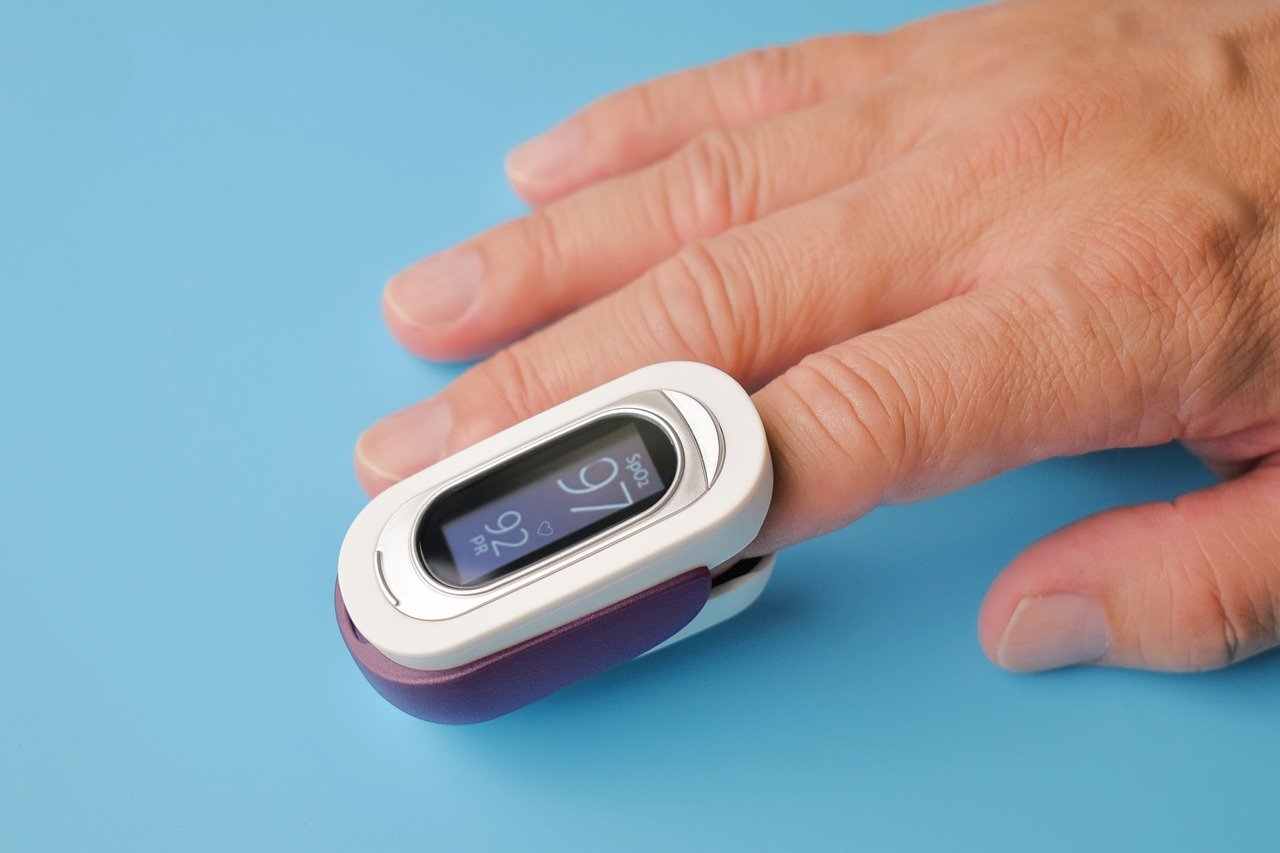
Oxymètre de pouls qui mesure la SpO2 (niveaux de saturation en oxygène du sang). Une personne en bonne santé devrait se situer entre 94 % et 100 %.
Les innovations technologiques concernent non seulement du matériel pour les personnes âgées elles-mêmes mais également des équipements médicaux pour les professionnels de la santé (infirmières, kinésithérapeutes), tels que des équipements diagnostiques et de laboratoire.
Ce matériel médical comprend des biens de consommation à usage unique (p.ex. pansements, masques respiratoires, gel hydroalcoolique, gants médicaux) et des équipements plus durables tels que que l’électrocardiogramme, le tensiomètre, le thermomètre et les stéthoscopes.
Les oxymètres de pouls sont également très populaires en période de COVID. Ces appareils mesurent deux choses distinctes : le premier chiffre qui apparaît est la fréquence du pouls, habituellement accompagné d’un petit cœur, alors que le second chiffre est le niveau d’oxygène dans le sang.
La rivastigmine est indiquée dans le traitement symptomatique des formes légères à modérément sévères de la maladie d’Alzheimer.
En France, la rivastigmine est également indiquée dans le traitement des formes légères à modérément sévères de démence chez les patients souffrant d’une maladie de Parkinson idiopathique.
Substance active
Nom commercial
Laboratoire
Tartrate hydrogéné de rivastigmine
Exelon®
Novartis Pharma
Comment la rivastigmine fonctionne ?
Il existe un faisceau de neurones qui se projettent dans deux structures du cerveau appelées cortex et hippocampe.
Ces neurones libèrent un neurotransmetteur jouant un rôle prépondérent dans l’apprentissage et la mémoire : l’acétylcholine.
Ce faisceau de neurones produisant l’acétylcholine est appelé « la voie cholinergique neuronale ».
La destruction progressive de cette voie cholinergique entraîne la diminution de production d’acétylcholine.
Cette diminution d’acétylcholine est très vraisemblablement la cause des symptômes observés dans la maladie d’Alzheimer (perte de mémoire, perte de l’orientation…).
La rivastigmine augmente la libération d’acétylcholine dans le cortex et l’hippocampe en bloquant l’action de l’acétylcholinestérase, une enzyme qui dégrade l’acétylcholine libérée par les neurones.
On dit que la rivastigmine est un inhibiteur de l’acétylcholinestérase.
L’augmentation d’acétylcholine dans le cerveau est sensée être responsable de l’amélioration des symptômes observée après un traitement à la rivastigmine.
La rivastigmine a été approuvée dans une soixantaine de pays, dont la plupart des pays européens et d’Amérique du Nord. Elle est commercialisée depuis le dépuis des années 2000.
Sa demi-vie est de une à deux heures, mais sa dissociation de son récepteur es tlongue, si bien que la rivastigmine reste active pendant environ 10 heures après son administration.
Efficacité le la rivastigmine dans la maladie d’Alzheimer
Les données évaluant l’efficacité de la rivastigmine dans le traitement de la maladie d’Alzheimer (au stade léger à modérément sévère) proviennent à ce jour de 11 essais cliniques. Ces essais cliniques randomisées en double aveugle contre placebo ont été d’une durée de 3 à 12 mois environ.
Ces résultats (comparés au groupe placebo) ont montré que la rivastigmine (6-12 mg/jour) a des effets bénéfiques se traduisant par une amélioration, une stabilisation ou un retard du déclin des domaines suivants :
Impression clinique globale,
performance cognitive et,
activités de la vie quotidienne.
Aucun effet bénéfique n’a été rapporté sur le comportement.
Les effets bénéfiques sur l’impression clinique globale n’apparaissent qu’après 26 semaines de traitement.
Selon la Commission de la Transparence de la Haute Autorité de Santé (France), environ un tiers des patients tirent un bénéfice du traitement.
La Commission considère que ce médicament a un effet bénéfique modeste. (Amélioration du Service Médical Rendu de niveau IV)
Malgré un rapport efficacité/effets indésirables modeste, la Commission considère que le Service Médical Rendu de ce médicament reste important (niveau II).
Décembre 2011. La Haute Autorité de Santé conclut dans un communiqué de presse que les quatre médicaments* prescrits dans la maladie d’Alzheimer présentent un intérêt thérapeutique faible.
Elle recommande de limiter leurs prescriptions à un an, avec une réévaluation du traitement six mois après le début de celui-ci. Si le médicament atteint ses objectifs (ex. stabilisation ou ralentissement du déclin cognitif) et s’il n’a pas subi d’effet indésirable grave et/ou altérant sa qualité de vie, le traitement pourra être poursuivi jusqu’à un an.
Au-delà d’un an, la Commission de la Transparence recommande que le renouvellement du traitement soit décidé en réunion en présence du patient (si son état le permet) et de l’entourage familial et médical. Le traitement sera reconduit si le groupe de spécialiste donne son accord.
A la suite de nouvelles données scientifiques, la Haute Autorité de Santé avait décidé de réévaluer dès 2011 les quatre médicaments de la maladie d’Alzheimer disponibles à l’heure actuelle. Ce travail de révision a été bouclé à la fin de cette année. Les membres de la Commission de la Transparence qui a participé à la réévaluation des médicaments soulignent que le rapport entre l’efficacité de ces médicaments et leurs effets indésirables est jugé faible.
Cette commission estime que l’efficacité (discutable) de ces médicaments par rapport au placebo est principalement établie sur l’amélioration de la performance cognitive à court terme (un an maximum). Elle rajoute qu’il existe un risque d’effets indésirables (troubles gastro-intestinaux, cardiovasculaires et neuropsychiatriques notamment) pouvant nécessiter l’arrêt du traitement, ainsi qu’un risque accru d’interactions médicamenteuses (les patients âgés prennent souvent d’autres médicaments).
La Commission de la Transparence considère donc qu’il n’y a pas de différence de tolérance et d’efficacité entre les quatre médicaments et qu’ils n’apportent pas d’amélioration du service médical rendu.
L’actualisation des recommandations de bonne pratique sur la prise en charge de la maladie d’Alzheimer aboutira à leur publication d’ici la fin de l’année 2011. Source :Haute Autorité de la Santé.
Janvier 2012. Le guide NICE TA1111 (National Institute for Health and Clinical Excellence) recommande l’utilisation du patch EXELON (rivastigmine) dans le traitement de la maladie d’Alzheimer (intensité légère à modérée). Selon les chercheurs, ce mode d’administration permet d’obtenir un niveau stable du médicament dans la circulation sanguine (sur une période de 24hrs), réduisant ainsi le risque d’effets indésirables. Le risque d’interaction avec d’autres médicaments est également réduit. Enfin, il réduit les contraintes liées à la prise orale de médicaments.
Source : National Institute for Health and Clinical Excellence (NICE) Final Appraisal Determination. Donepezil, galantamine, rivastigmine and memantine for the treatment of Alzheimer’s disease (review of NICE technology appraisal guidance 111). Issue date: January 2011.
Des résultats confirmés par Cochrane
Selon une méta-analyse publiée dans Cochrane portant sur 9 études cliniques (4775 participants), la rivastigmine est plus efficace que le placebo dans les trois domaines suivants : cognitif, fonctionnel (AVQ, AVD) et impression globale chez les patients souffrant de la maladie d’Alzheimer d’intensité légère à grave, jusqu’à 52 semaines (Birks, 2009).
Efficacité dans d’autres maladies
Des essais cliniques sont menés dans le traitement d’autres troubles/maladies résumés dans le tableau ci-dessous.
Troubles/maladies
Domaines étudiés
Déclin cognitif léger
• Performance cognitive • Effet préventif sur la maladie d’Alzheimer ?
Démence mixte/vasculaire*
• Performance cognitive • Comportement
Démence à corps de Lewy
• Performance cognitive • Comportement
Démence associée à la maladie de Parkinson
• Performance cognitive • Comportement • Troubles du sommeil
* Les données évaluant l’efficacité de la rivastigmine dans le traitement de la démence mixte et/ou vasculaire (au stade léger à modéré) proviennent à ce jour d’un seul essai clinique randomisé en double aveugle contre placebo, d’une durée de 6 mois. Cette étude a montré que la rivastigmine a un effet modeste sur la performance cognitive, mais aucun effet sur les autres domaines (comparé au groupe placebo). De plus la fréquence des effets indésirables (anoréxie, nausée, vomissement, diarrhée et insomnie)est supérieure à celle du groupe placebo. Les données sont insuffisantes pour que la prescription de la rivastigmine soit préconisée. (voir actualités)
La rivastigmine prévient les chutes chez les patients atteints de Parkinson
Le traitement avec la rivastigmine (Exelon, Novartis Pharma) réduit les chutes chez les patients atteints de la maladie de Parkinson (stade modéré), selon une étude de phase 2.
« Le traitement améliore la démarche, la vitesse de la marche et l’équilibre, le tout s’accompagnant d’une réduction du taux de chute », a déclaré l’un des chercheurs britanniques (Université de Bristol, Royaume-Uni).
Les résultats, bien que très encourageants, doivent être reproduits à plus grande échelle dans un essai de phase 3 avant que le médicament soit recommandé pour prévenir les chutes.
Dans la maladie de Parkinson, la diminution de l’acétylcholine (un neurotransmetteur) contribue à affaiblir la démarche et la démarche, et diminue la performance cognitive.
La rivastigmine est déjà approuvée dans le traitement de la démence associée à la maladie de Parkinson, mais pas encore pour traiter les troubles de la marche.
Le médicament augmente la cognition en empêchant la dégradation de l’acétylcholinestérase – enzyme qui dégrade l’acétylcholine.
L’étude a inclus 130 patients atteints de la maladie de Parkinson sans démence qui avaient en moyenne chuté 5 fois lors de l’année précédente. Les participants ont été traités au hasard avec un placebo ou la rivastigmine, la dose étant augmentée de 3 mg par jour pour atteindre 12 mg par jour.
Les participants ont marché 18 m avec un appareil de mesure autour de leur taille. Ceux-ci devaient dans le même temps énuméré des mots commençant par la même lettre (double tâche simple) ou par des lettres alternées (double tâche complexe ; ex lettres A, E, A, E..).
Les chercheurs ont constaté que le nombre de chutes mensuel était réduit de 45% chez le groupe traité à la rivastigmine.
Le médicament n’a pas d’effets significatifs sur les épisodes de « gel de la marche » ou les résultats neuropsychologiques (ex. peur de tomber, anxiété ou dépression).
Les deux groupes ont rapporté un nombre élevé d’événements indésirables, avec des effets indésirables gastro-intestinaux (nausées et vomissements) plus fréquents dans le groupe traité.
En affectant directement l’attention, il est possible que les patients atteints de maladie de Parkinson et traités avec la rivastigmine sont en mesure de prêter plus d’attention à leur marche et donc de tomber moins souvent.
L’autre hypothèse est que le médicament stabilise la marche en affectant directement certaines voies neuronales du tronc cérébral (partie du cerveau qui contrôle la posture).
Bien que les exercices physiques aient un effet bénéfique (ex. tai-chi, exercices pour améliorer la force et l’équilibre et prévenir les chutes), les patients ont besoin d’être très motivés et de ne pas avoir de troubles cognitifs marqués. Des thérapies telles que la stimulation cérébrale profonde nécessitent que le patient soit relativement en bonne santé.
Source : E. J. Henderson et coll. Rivastigmine for gait stability in patients with Parkinson’s disease (ReSPonD): a randomised, double-blind, placebo-controlled, phase 2 trial. Lancet Neurol. Volume 15, No. 3, 249–258, mars 2016.
Posologie et mode d’administration
La rivastigmine est généralement prise deux fois par jour.
La dose initiale est de 1,5mg deux fois par jour (soit 3 mg/jour) et peut être doublée si le patient tolère bien la dose initiale pendant au moins deux semaines de traitement.
La dose habituelle de rivastigmine varie de 6 à 12 mg/jour.
La dose maximale ne doit pas dépasser 6 mg deux fois par jour (soit 12 mg/jour).
Chaque gélule contient 1,5mg, 3mg, 4,5mg ou 6mg de rivastigmine.
La solution orale contient 2 mg de rivastigmine par ml.
Ne pas prendre 2 doses à la fois si l’on a omis de prendre une dose à l’heure habituelle.
Les patients doivent être surveillés de près (pour déceler les effets indésirables eventuels) au début du traitement et lorsque l’on augmente la dose.
Contre-indications – mises en garde
La rivastigmine est contre-indiquée chez les personnes souffrant d’insuffisance hépatique.
La rivastigmine peut amplifier la relaxation musculaire durant une anesthésie.
La rivastigmine peut empêcher l’action de médicaments anticholinergiques (médicament bloquant les effets de l’acétylcholine) ou, au contraire, augmenter les effets d’agents mimant ceux de l’acétylcholine.
Les patients ayant été victimes de convulsions ou ayant un risque élevé de développer un ulcère seront étroitement surveillés.
Effets indésirables
Les effets indésirables sont plus fréquents chez les patients traités à la rivastigmine (6-12 mg/jour) que chez le groupe placebo. Les troubles digestifs constituent l’effet indésirable le plus fréquent et peuvent entraîner un arrêt du traitement.
Les effets indésirables les plus courants obtenus chez les patients traités à la rivastigmine (aux doses de 6 à 12 mg/jour) sont la nausée (37%), les vomissements (23%), les étourdissements (19%), la diarrhée (16%), les maux de tête (15%), l’anorexie (13%), les douleurs d’estomac (11%) et la fatigue (7%).Cependant, ils sont généralement d’intensité légère à modérée.
Selon une étude canadienne menée sur l’analyse de 1,4 millions de dossiers de patients âgés de plus de 67 ans, la prise récente d’inhibiteurs d’acétylcholinestérase (donépézil, rivastigmine ou galantamine) augmente le risque (+113%) d’hospitalisation provoquée par une bradycardie (ralentissement du rythme cardiaque au dessous de la normale, c’est-à-dire inférieur à 60 battements par minute). Les autres médicaments ne sont pas reliés à la prise d’autres médicaments (ex. pompe à proton). Source: Park-Wyllie LY et coll. Cholinesterase inhibitors and hospitalization for bradycardia: a population-based study (source: PLoS Med. 2009 Sep;6(9):e1000157)
Publications
Craig D, Birks J. Rivastigmine for vascular cognitive impairment. Cochrane Database of Systematic Reviews 2004, Issue 2. Art. No.: CD004744. DOI: 10.1002/14651858.CD004744.pub2.
Kavirajan H, Schneider LS. Lancet Neurol. 2007 Sep;6(9):782-92. Efficacy and adverse effects of cholinesterase inhibitors and memantine in vascular dementia: a meta-analysis of randomised controlled trials.
Pour de plus amples informations sur ce médicament, veuillez contacter votre médecin ou votre pharmacien.
Cet article doit être considéré comme une information et un outil de formation et non comme une consultation médicale; laquelle relève, stricto sensu, d’une relation individuelle avec un professionnel patenté et selon les règles en vigueur dans le pays.