
Quand un mal de tête est-il préoccupant?

The Brain And Movement

Understanding the Role of Micronutrients

Natural Remedies for Chronic Hay Fever

Differentiating Between Primary and Secondary Insomnia

How Stress Impacts Mental and Physical Health

Caffeine – Is This the Cause of Your Anxiety?

Identifying and Treating Hypomagnesemia

A Closer Look at Essential Oil Therapy

La fréquence cardiaque rapide

Author Archives: Stéphane Bastianetto

  1. Quand un mal de tête est-il préoccupant?

    Leave a Comment

    Un mal de tête sévère peut être le symptôme d’une maladie potentiellement dangereuse. 

    Avec un diagnostic précoce, cependant, un médecin peut traiter la cause sous-jacente pour réduire le risque de complications.

    Symptômes inquiétants d’un mal de tête

    Une personne doit consulter un médecin si elle a un mal de tête qui ne disparaît pas.

    Voici quelques symptômes qui indiquent qu’une personne doit rechercher un traitement médical immédiat en raison d’un mal de tête qui :

    • devient insupportable en quelques secondes à quelques minutes
    • commence ou change d’intensité lors d’un changement de position
    • commence lorsqu’une personne tousse, éternue ou se fatigue
    • ne disparaît pas
    • se produit avec des symptômes tels que fièvre, frissons, sueurs nocturnes et perte de poids inattendue
    • commence alors que la personne n’a pas d’antécédents de maux de tête ou de migraine
    • survient toujours au même endroit
    • s’accompagne de symptômes neurologiques associés, tels que des changements de vision, un engourdissement ou une faiblesse d’un côté du corps, ou des changements d’élocution.
    Bien que généralement inoffensif, un mal de tête peut indiquer une situation d’urgence.

    Si une personne présente l’un de ces symptômes, elle doit consulter immédiatement un médecin.

    Une personne devrait également demander une aide médicale immédiate si elle a :

    • un état mental altéré
    • un affaissement du visage ou incapacité à bouger d’un côté du corps
    • des crises d’épilepsie
    • des antécédents d’immunosuppression, en raison d’une maladie telles que le VIH ou le cancer
    • une douleur soudaine intense et insupportable
    • des troubles visuels non liés à la migraine

    Causes possibles

    Tumeur au cerveau

    Les maux de tête peuvent représenter la croissance de la tumeur cérébrale. Certaines personnes subissent également des crises.

    En plus des maux de tête, les symptômes de tumeur cérébrale chez les personnes qui se rendent aux urgences sont:

    • crises d’épilepsie
    • état mental altéré
    • changements visuels
    • nausée
    • vomissement
    • étourdissements ou chutes

    Les symptômes spécifiques peuvent varier en fonction de l’emplacement de la tumeur.

    Le traitement dépend de l’emplacement de la tumeur et de sa possible propagation.

    Empoisonnement au monoxyde de carbone

    Le monoxyde de carbone est un gaz inodore et incolore qui se produit lorsqu’une personne brûle du carburant dans une automobile, une cuisinière, un petit moteur, une lanterne, un gril, une cheminée ou une cuisinière à gaz.

    Le monoxyde de carbone se fixe plus facilement aux cellules que l’oxygène dans la circulation sanguine. En conséquence, les molécules de monoxyde de carbone peuvent remplacer l’oxygène, ce qui peut finalement conduire à la suffocation et à la mort.

    Les symptômes supplémentaires d’ intoxication au monoxyde de carbone comprennent:

    • vertiges
    • faiblesse
    • nausée
    • vomissement
    • confusion
    • douleur thoracique

    Certaines personnes qui dorment ou ont bu de l’alcool peuvent ne pas ressentir de symptômes, ce qui peut augmenter le risque de mortalité lié à une exposition au monoxyde de carbone.

    Les professionnels de la santé traiteront l’intoxication au monoxyde de carbone en utilisant de l’oxygène et un médicament appelé bleu de méthylène, qu’ils administreront par voie intraveineuse (IV).

    Atteinte de l’artère carotide

    Les personnes ayant une atteinte de l’artère carotide auront des maux de tête. Cela se produit lorsqu’il y a une déchirure dans les couches de l’une des artères carotides qui irriguent le cerveau. En conséquence, le sang peut s’accumuler dans les couches de l’artère.

    Elle peut entraîner un accident vasculaire cérébral, des lésions cérébrales et la mort.

    Le mal de tête qui se développe en raison de l’atteinte de l’artère carotide n’affecte généralement qu’un seul côté de la tête.

    Une personne peut également ressentir des douleurs au cou ou des changements d’élocution.

    Le traitement dépendra des symptômes et de l’emplacement de la lésion dans l’artère carotide. Les options comprennent généralement:

    • anticoagulants
    • traitement endovasculaire
    • intervention chirurgicale

    Commotion cérébrale

    Une commotion cérébrale est une lésion cérébrale due à un coup ou à une secousse à la tête. Le mouvement affecte le positionnement du cerveau dans le crâne et peut endommager les cellules cérébrales.

    Si une personne ne reçoit pas de traitement, cela peut entraîner des lésions cérébrales, des convulsions et la mort.

    Un mal de tête est le symptôme le plus courant de la commotion cérébrale.

    D’autres symptômes comprennent:

    • perte de mémoire
    • mouvements maladroits
    • une perte de conscience
    • changements de personnalité
    • élèves de taille différente
    • confusion

    Le traitement comprend le repos et la limitation de l’activité physique pour permettre au cerveau de guérir.

    Traiter les symptômes est également vital. Par exemple, un médecin de soins primaires ou un neurologue devrait traiter un mal de tête tôt et un psychiatre devrait traiter tout sentiment de dépression ou d’anxiété dès que possible.

    Si une personne a un hématome ou une collection de sang à l’extérieur d’un vaisseau sanguin, elle peut nécessiter une intervention chirurgicale pour l’évacuer ou le réduire.

    Crise d’hypertension

    Une crise d’hypertension survient lorsque la pression artérielle systolique d’une personne est supérieure à 180 millimètres de mercure (mm Hg) ou que sa pression artérielle diastolique est supérieure à 120 mm Hg, selon l’American Heart Association. Une augmentation soudaine ou significative de la pression artérielle peut provoquer des maux de tête.

    Si une personne ne reçoit pas de traitement rapide, une crise hypertensive peut provoquer des conditions potentiellement mortelles telles qu’un accident vasculaire cérébral, une crise cardiaque, un œdème pulmonaire ou une dissection aortique.

    Un mal de tête est un symptôme courant lorsqu’une personne souffre d’ hypertension artérielle, selon une étude à long terme de l’American Journal of Hypertension .

    D’autres symptômes peuvent inclure un essoufflement, des saignements de nez et une anxiété profonde.

    Un médecin peut admettre une personne en situation d’urgence d’hypertension à l’hôpital.

    Les traitements comprennent des médicaments tels que les bêtabloquants, les diurétiques thiazidiques, les antagonistes des récepteurs de l’angiotensine et les enzymes de conversion de l’angiotensine.

    Méningite

    La méningite est une infection des couches externes du cerveau. Il peut se développer en raison d’une infection antérieure de l’oreille interne, des sinus ou d’une autre zone du corps.

    Une méningite non traitée peut entraîner une septicémie , une infection grave du corps qui provoque l’arrêt des organes.

    En plus des maux de tête, les symptômes de la méningite comprennent:

    • fièvre
    • un cou rigide
    • la nausée
    • vomissement
    • sensibilité à la lumière

    Les médecins traitent généralement la méningite à l’aide d’antibiotiques .

    Accident vasculaire cérébral

    Il existe deux principaux types d’accident vasculaire cérébral : ischémique et hémorragique. Un accident vasculaire cérébral ischémique peut survenir lorsqu’un caillot sanguin se loge dans un vaisseau cérébral. Un accident vasculaire cérébral hémorragique peut survenir en raison d’un saignement dans le cerveau.

    Si un médecin ne peut pas traiter l’AVC rapidement, une personne peut développer des incapacités importantes ou mourir. Toute personne victime d’un AVC a besoin de soins médicaux immédiats.

    Selon un article du Nursing Times, un accident vasculaire cérébral hémorragique est plus susceptible de provoquer des maux de tête qu’un accident vasculaire cérébral ischémique. Cependant, une personne peut éprouver un mal de tête dans les deux types.

    Certains symptômes supplémentaires comprennent:

    • visage tombant
    • changements dans l’état mental de la personne
    • faiblesse d’un côté du corps
    • engourdissement d’un côté du corps
    • vomissement
    • changements de discours

    Le traitement dépend du type d’AVC. Les options incluent la prise de médicaments pour briser un caillot et la chirurgie pour enlever un caillot ou réparer un vaisseau sanguin endommagé.
  2. The Brain And Movement

    Leave a Comment

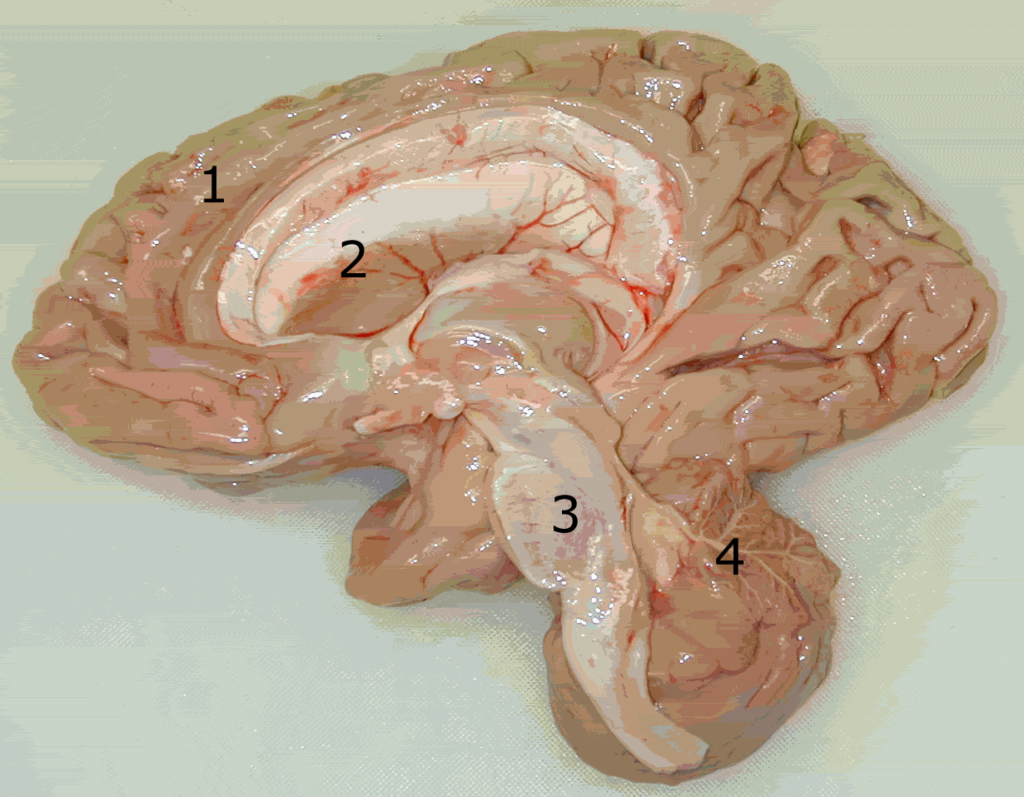
    The parts of the brain that controls movement involve a hierarchical and interconnected network that includes:  

    • 1. Motor area of the frontal lobe  
    • 2. Basal ganglia located inside the cerebral hemispheres  
    • 3. Pons
    • 4. Cerebellum
    Photo representing the medial surface of a human brain (see the legend below). Source:  Douglas Hospital Research Center’s Brain Bank (Montreal, Canada).

    1 Motor area
    The highest level of the network (in direct relation with basal ganglia, the cerebellum and the pons)  
    Initiates the activation of muscles (involuntary movements)
    Controls precisely the conscious voluntary movements of hands and fingers (acts directly with the spinal cord)  
    Play a pivotal role in the learning of various motor skills 

    2 Basal ganglia (not visible in the picture)  
    Closely related to motor area 
    Control tone and regulate involuntary movements by modulating strength and direction.  
    Contribute to perform complex movements
    Participate in the acquisition of motor skills 

    3 Pons
    Connects the brain to the spinal cord
    Involved in body tone that is necessary to be kept upright
    Involved in the control of ocular and facial movements
    Involved in physiological regulations (breathing, blood pressure…)  

    4 Cerebellum
    Closely linked to motor area and pons
    Modulates and coordinates voluntary movements initiated by motor area in order to be correctly accomplished (in particular fast movements)
    Maintains balance and posture
    Role in learning and acquisition of various motor skills

    This brain network (and in particular basal ganglia) intervenes not only in the control of movement but also in learning and acquisition of motor skills (for example to serve in tennis, to change gears in a car, or to use a spoon):  we say that this network plays a role in the functioning of the implicit memory 1

    1 Implicit memory (that includes procedural memory) is opposed to explicit memory (also called declarative memory) since the former one consists of recalling personal events and facts in a specific context.

    To summarize

    Implicit (procedural) memory = learning of motor skills
    Explicit memory = learning and use of knowledge about facts (semantic knowledge) and events (episodic memory)

    Implicit memory is preserved during normal brain aging and in people with Alzheimer’s disease (contrary to explicit memory). It is however disturbed in people that suffer from diseases caused by the destruction of basal ganglia (such as Parkinson’s and Huntington’s diseases).

  3. Understanding the Role of Micronutrients

    Leave a Comment

    What is the Difference Between Macro and Micronutrients?

    While macronutrients often receive more attention, it is the micronutrients that can really draw the line between vitality and illness.

    Macronutrients are needed in daily doses of up to 10s or 100s of grams per day, and can be easily found in things like carbohydrates, proteins, and good fats – these are the things which we include in our diet for the smooth functioning of major bodily systems and provide us with important tools like energy and calories.

    Though micronutrients are needed in significantly smaller amounts than macronutrients (typically several micrograms to a gram per day), the role they play is instrumental to warding off disease and protecting the health integrity of bodies they inhabit. Micronutrients can be categorised into four main groups.

    Water Soluble Vitamins

    These water soluble micronutrients include vitamins B1, B2, B3, B4, B5, B6, B7, B9 B12, and vitamin C. They easily dissolve in water and therefore need to be regularly replenished in order for the body to maintain a stable amount. All of these vitamins are involved in multiple processes, but are particularly important for energy production.

    Fat Soluble Vitamins

    Vitamins A, D, E, and K dissolve more efficiently alongside other fatty substances, and are therefore recommended for consumption in tandem with a meal. After being consumed, they will be stored in the liver or fatty tissues throughout the body. Fat soluble vitamins are most useful for bone growth, organ function, and blood clotting.

    Trace Minerals

    Technically minerals but still belonging to the micronutrient group, things like iron, manganese, fluoride, copper, selenium, zinc, and iodine are essential for wound healing, hormone creation, and defence against oxidative damage.

    Macro-minerals

    Potassium, calcium, phosphorous, chloride, sodium, sulphur and magnesium all fit into the macro-minerals subgroup. They are needed in slightly larger amounts than other micronutrients, and all play roles within the body that are extremely diverse. Some of those roles include nerve and muscle function, digestive fluid balance, blood pressure maintenance, and bone and cell membrane structure.

    Where to Find Micronutrients

    The best place to find micronutrients is not in supplements, but rather in food. Fresh fruits, vegetables, seeds and nuts contain all of the micronutrients we need to function and more, which is one of the reasons why it is so important to consume them in wide variety.

    Different plant foods contain different nutrients, and studies suggest that we crave the foods which contain the ones we are most in need of. Because the daily amount of micronutrients needed is so small, replenishing them is a fairly easy process.

    Encourage your body to adjust to eating a variety fresh fruits and vegetables every day to fortify your health and protect you from developing nutrient-deficient diseases that could have been avoided. You ca do this by having smaller meals, snacking while at https://www.cryptothrills.io/ or simply cultivating healthier eating habits. For such a small thing, the health benefits of micronutrients are truly invaluable.

  4. Natural Remedies for Chronic Hay Fever

    Leave a Comment

    Understanding Hay Fever

    Hay fever is a phrase used to describe a common condition called allergic rhinitis. Affecting 1 in every 5 people, hay fever occurs mainly during spring and summertime, though some unfortunate few may suffer with it all year round.

    When particles from pollen, grass, trees, or weeds are released into the air for pollination, they can be inhaled via the human nasal cavities and cause an unpleasant allergic reaction in our bodies. Despite its name, “hay fever” does not mean that sufferers are allergic to hay, nor will they develop a fever in relation to the condition.

    Symptoms of hay fever are similar to that of a cold: runny nose, sneezing, sinus pressure and congestion. There are many antihistamine products available to alleviate the irritating symptoms of hay fever, but research suggests that many effective treatments may be sitting inside your very own home.

    Stinging Nettle

    This commonly unpleasant weed with itchy thistles forms a part of the natural antihistamine family. By creating an anti-inflammatory effect inside the body, stinging nettle may help to provide relief from the itchiness that hay fever brings. It can be powdered and put into oral capsules, or brewed into a tea with some honey.

    Honey and Bee Pollen

    Using a technique called immunotherapy, the regular consumption of honey and bee pollen in small doses can allow the body to acclimatise to the allergen until it reaches a point where it no longer sees pollen as a threat. However, it needs to be honey and pollen specifically from the area in which you live.

    A 2011 study at the International Archives of Allergy and Immunology found that people with hay fever who consumed local honey from birch trees were able to reduce their allergies by 60%.

    Vitamin C

    Like the stinging nettle, this essential vitamin also forms a part of the natural antihistamine family. Also recommended for people experiencing a flu or the common cold, vitamin C can increase lung capacity and helps to clear up congested airways for easier breathing.

    Things to Avoid

    People with chronic hay fever need to avoid situations in which they are especially vulnerable to airborne irritants. For example, things like playing or lying in the grass, picking flowers during springtime, or spending time in a dusty environment will all result in congestion and itchiness that may take hours to disappear.

    Helpful Tips

    As painful as it can be for those who love the outdoors, anyone with a serious hay fever allergy would be wise to stay mainly indoors and enjoy real money play games during a high pollen count season. If you really need to be outside, it can be helpful to wear a light scarf around your neck and mouth, or wraparound sunglasses that protect your eyes from wandering pollen.

    Taking a shower after doing so will also allow your body to be cleansed of any lingering allergens that may exist on the skin.

  5. Differentiating Between Primary and Secondary Insomnia

    Leave a Comment

    The Two Faces of Insomnia

    The sleep disorder known as insomnia affects millions of adults all over the world. It is characterised by regular sleep disturbances, an inability to fall asleep naturally, or relentless nightly waking that makes a full night of sleep nearly impossible to accomplish.

    There are several factors involved that may cause or perpetuate this common problem, but the first thing you need to understand is that there are two completely different types of insomnia which can develop.

    • Primary insomnia
    • Secondary insomnia

    Both can range in severity between mild and chronic, and both can be incredibly difficult to endure (some people may go for years without a full night of sleep). Although these two insomnia types are similar in the sense that they are inherently identified as disturbed or disrupted sleep cycles, what separates them are their causes.

    Primary (Idiopathic) Insomnia         

    This form of insomnia can be identified by its indifference. Primary insomnia is an inherent sleep dysfunction which is not caused by any exterior factors and therefore cannot be treated by changes in environment, behaviour, or otherwise. It is an isolated disorder, which makes it quite challenging to treat successfully.

    People with primary insomnia tend to develop their disorder at a young age and live with it for a longer period of time than those with secondary insomnia purely because the cause is so difficult to grasp – and without being able to grasp what the cause of a disorder is, how can one treat it?

    Often those who have dealt with primary insomnia for many years will develop something called paradoxical insomnia – a subcategory of insomnia in which an affected person will understand that they have the disorder, but lack active cognizance of the long-term symptoms such as general fatigue, lack of focus, and memory deterioration. Their bodies become adjusted to the sleep deficiency as a means of self-preservation, but their mental health may suffer due to it. This is extremely unhealthy as the body does not stop needing good sleep, it just stops trying to pretend as though it receives it.

    Secondary (Comorbid) Insomnia

    Secondary insomnia is significantly more common and much easier to treat than primary insomnia. The most notable difference is the fact that it is characterised by a direct link to some external factor that physically disrupts sleep and prevents proper rest from occurring.

    External factors commonly include things like illness or pain, jet lag, anxiety, bright lights, loud noises, or an uncomfortable sleeping environment. The presence of these factors are easy enough to identify, allowing treatment to be a much simpler and more obvious process. By removing or treating the cause of your dysfunction, you can quickly restore your sleep cycle to an optimal status. This means you’ll enjoy life more, have more fun when you play for real money, and be more alert and aware.

    If you are struggling to sleep through the night, considering the nature of your sleep environment can be the first step towards effectively treating (the right kind!) of insomnia.

  6. How Stress Impacts Mental and Physical Health

    Leave a Comment

    The Stress Pandemic 

    It should not come as a surprise that stress is the root cause of so many of the everyday aches and pains that humans of all ages experience. However, many people remain unaware of just how dangerous the long-term effects of high stress levels are – in some cases, triggering an onset of symptoms that can range anywhere between moderate to lethal.

    But stress is near impossible to avoid, with recent studies suggesting that present generations are dealing with higher stress and anxiety levels than ever before. Things like social unrest, climate crisis – and more recently, a global pandemic – in addition to the strain of a struggling economy have all heartily contributed to a greater sense of anxiety and stress that all of us can unfortunately relate to.

    At a time like this, educating ourselves and exploring accessible anti-stress measures is extremely important.

    Stress Within the Body and Mind

    Inside your physical body, stress has a different name: cortisol.  Cortisol is the stress hormone, responsible for all of the physical symptoms your body may experience when tolerating mild to severe levels of worry, tension, or trauma. Cortisol can trigger the following symptoms:

    • Tense muscles
    • Heartburn
    • Fertility issues
    • Rapid breathing
    • Stomach ache
    • Headache
    • High blood pressure

    The source of almost all of these symptoms relate to the circulatory system. When blood is not being circulated efficiently, a myriad of unpleasant (and potentially dangerous) symptoms occur. Additionally, high stress levels can drive us towards unhealthy habits such as drug addiction, alcohol abuse and generally reckless behaviour. Long term exposure to abnormally high levels of cortisol can result in a heart attack, stroke, permanent reproductive damage and type 2 diabetes.

    Stress can also cause a lot of mental suffering. Long term stress can negatively impact the way our brains produces grey and white matter (both integral to developing nerve cells and a healthy, functioning brain), which can make it harder to produce important neurochemicals like serotonin.

    A lack of important neurochemicals and hormones can trigger mental illnesses such as depression, phobias, anxiety disorders, and post-traumatic stress disorder (PTSD).

    Ways We Can Cope

    Nobody is alone in the fight for manageable stress levels, and there are many methods for stress reduction that anyone can implement for a stronger, healthier, and calmer state of being.

    Aside from actively avoiding unnecessary situations that you know may trigger a sense of panic, here are some of the most effective anti-stress techniques you can try:

    • Regular exercise
    • A balanced diet
    • 8 – 10 hours of sleep at night
    • Spending time with loved ones
    • Reduced caffeine and alcohol consumption
    • Consensual adult sexual activity

    It is never too late to start incorporating healthy, anti-stress habits like playing at https://www.zarcasino.co.za/ that facilitate the regulation of cortisol. Every hormone in your body is there for a reason, but that doesn’t mean they have to control your life.

  7. Caffeine – Is This the Cause of Your Anxiety?

    Leave a Comment

    The Connection Between Caffeine and Anxiety

    A staggering 2.25 billion cups of coffee are consumed every day by the human species. A huge part of our daily lives, caffeine in the form of hot, strong coffee has become the most popular beverage of choice in nearly every country across the world.

    Whether you like coffee or not, chances are you consume caffeine regularly via energy drinks, chocolate, or green tea. Caffeine gives us energy and the ability to concentrate, two things which have become fundamental in up keeping the speed of modern day life. The effect on our productivity and focus levels make it is easy to see why we have become so addicted to this naturally-occurring substance.

    But caffeine doesn’t just provide us with energy. Because it increases the pace of circulation as well as act as a nervous system stimulant, there are a whole range of negative side effects that can develop when consumed too often or in too high doses. One of those main negative side effects is anxiety.

    What is the Link Between Caffeine and Anxiety?

    Caffeine can both mimic and/or trigger a state of anxiety. So not only does it create symptoms that are similar to those associated with anxiety (leading to a form of default anxiousness), it can also genuinely trigger those prone to anxiety into an acutely agitated state.

    Let’s look at what happens inside your body after consuming a standard 250 ml cup of coffee (equivalent to 95 mg of pure caffeine):

    • Increased heart rate
    • Heightened blood pressure
    • Increased production of stomach acid

    These three main physical effects of caffeine consumption are often the causes behind unpleasant developments like headaches, digestive discomfort, heart palpitations, nausea, and mental confusion. Sound familiar? If you are a person who suffers with an anxiety disorder, these effects are a regular occurrence. By consuming caffeine, an anxiety prone individual may struggle to maintain a sense of calmness and mental clarity even more so than on a normal day.

    Curbing the Caffeine Habit

    Even if you are not an anxiety prone individual, curbing your intake of caffeine can be an extremely advantageous decision. Not only will it prevent you from eventually developing a predisposition to caffeine-induced anxiety, but it can result in a number of physical health benefits like better mineral absorption, weight loss, better sleep, and more balanced hormones. This will leave you feeling better when you want to earn real money too.

    One of the best ways to reduce your consumption of caffeine is to receive it through substances other than coffee. For example, there is a small but notable amount of caffeine to be found in green tea, raw cacao, and guarana berries.

    By using any of these naturally occurring foods as a substitute for your morning cup of coffee, you can simultaneously remove an anxiety-inducing factor from your life and introduce a new and healthy treat into it at the same time.

  8. Identifying and Treating Hypomagnesemia

    Leave a Comment

    Identifying and Treating Hypomagnesemia

    Affecting approximately 2% of the general population, hypomagnesemia is most commonly found in hospitalised adults over the age of 30. The reason hospitalisation is a regularly occurring overlap with this low magnesium condition is because it is difficult to retain the correct amount of magnesium while experiencing abnormal metabolic behaviour (e.g. vomiting or excreting excessively), which often happens to patients while undergoing the stress of illness, surgeries, or trying a new medication.

    Hypomagnesemia is a condition characterised by dangerously low levels of magnesium. Magnesium is one of seven vital macro-minerals which humans rely on for general health. Adult women need to consume roughly 300 mg of magnesium per day, while men require as much as 400 mg in order to regulate the smooth functioning of over 300 metabolic reactions within the body, including:

    • Cellular production
    • Cell stabilisation
    • Protein synthesis
    • Transmission of nerve signals
    • DNA synthesis
    • Glycolysis
    • Bone and cardiac function
    • Glucose metabolism

    These are just a small percentage of the many important functions that magnesium provides. Although only a small amount of it is stored in the body, its presence is responsible for so many of the biological processes which we may take for granted. Without magnesium, the body isn’t able to maintain normal muscle and nerve function, regulate the heartbeat, or fortify bones effectively.

    Symptoms To Watch For

    Those with hypomagnesemia are likely to experience the following symptoms of deficiency:

    • Muscle spasms
    • Muscle cramps
    • Seizures
    • Irregular heartbeat
    • Osteoporosis (brittle bones)

    Hypomagnesemia is often associated with kidney disorders because it is the kidney’s job to regulate how much magnesium is being retained by the body. If the kidneys are not able to function optimally, they may allow for the loss of too much magnesium. In the event of excessive diarrhoea, urination or vomiting, the body also loses a lot of magnesium, which can quickly cause a deficiency. 

    A Not Uncommon Affliction

    Hypomagnesemia may not be very common, but general magnesium deficiencies are. With a growing interest in commercial exercise and workouts, more and more people are becoming aware of how their muscles are impacted by the presence (or lack thereof) sufficient magnesium levels.

    One of the ways that highly physically active people combat low magnesium is through an Epsom salt bath after exercise. Epsom salts contain magnesium sulphate, a crystallised form of magnesium which dissolves in water and can be absorbed quite effectively through the skin.

    Alternatively, most people will absorb their intake through magnesium rich foods such as dark chocolate, pumpkin seeds, spinach, cashews, soymilk, edamame beans, and salmon. However, those with hypomagnesemia (as opposed to those with very mild magnesium deficiencies) will need to receive proper treatment from a doctor if they are to get their health back on track.

    Fortunately, because the ideal amount of magnesium is already so small, most people with hypomagnesemia can be treated fairly quickly with high quality supplements administered by a professional, so you’ll be back to normal and able to spend some time with real money play games before you know it.

  9. A Closer Look at Essential Oil Therapy

    Leave a Comment

    Essential Oils: Myth or Medicine?

    Natural essential oils have been in use since the dawn of primitive medicinal practises. Our ancestors utilised them for their organic remedial properties, and as the modern world has started to once again show interest in ancient methods and ways of being, so has the interest in aromatherapy blossomed. Many people all over the world regularly use essential oils to help relieve insomnia, anxiety, physical pain and skin problems.

    However, not everyone is convinced. There is a fair amount of controversy associated with the medicinal use of essential oils, and many people perceive their healing properties as no more than a placebo effect. All things considered, here is what we do know about how essential oils work and why some people may testify to their effectiveness.

    The Olfactory System

    The olfactory system is the sensory system in your nose that allows you to have a sense of smell. Stimuli (odorants) that you inhale through your nasal cavities will enter the olfactory system and be delivered to the forebrain, where they may interact with the amygdala and hypothalamus parts of the brain.

    This results in the odorants being processed and identified for an effective and appropriate emotional, visceral, or motor reaction. The olfactory system can also be a gateway to allowing stimuli into other systems, such as the nervous system or metabolic system. The olfactory system is responsible for the reactions that your mind or body might have when being treated with aromatherapy. There are some essential oils which initiate certain responses in the body when inhaled directly, allowing for certain reactions to occur.

    Lavender oil, for example, is known for the sedative, analgesic, and anxiolytic effect it produces when inhaled. Recent studies suggest that lavender oil is a valid and comprehensive tool to use against insomnia, but how exactly is that result achieved? The answer lies not just with the olfactory system, but with the systems it allows odorants like lavender to access, such as the nervous system.

    The Nervous System  

    Oils like lavender are only effective once they have reached the nervous system. This vital bodily system is predominantly responsible for the functioning of pain receptors, motor responses and temperature control. Via these functions, the body is able to regulate sleep, stress levels, and pain.

    When lavender oil has made its way to the nervous system via the olfactory system, it can start to create a sedative environment within the body that promotes physical and mental relaxation, ultimately facilitating sleep and reduced anxiety.

    Conclusion

    Lavender is just one of the many popular aromatherapy options, but there are hundreds of others that work in similar ways to produce a wide variety of healing effects. Plus, you don’t even have to earn real money to buy it, you can grow your own for free at home. Some may work better than others, but all of them will start with the nose.

  10. La fréquence cardiaque rapide

    Leave a Comment

    La fréquence cardiaque rapide est une mesure de l’activité cardiaque d’une personne pendant qu’elle pratique un exercice. 

    Les gens peuvent l’utiliser pour optimiser leurs entraînements en s’assurant que leur fréquence cardiaque reste dans la plage idéale. Cette mesure peut également indiquer le niveau de forme physique global d’une personne.

    Une personne peut calculer rapidement sa fréquence cardiaque rapide idéale en soustrayant son âge de 220. Ce calcul fournit la fréquence cardiaque maximale de la personne.

    Leur fréquence cardiaque se situera entre 64% et 76% de ce nombre pendant un exercice d’intensité modérée et entre 77 et 93% pour un exercice d’intensité intense.

    Qu’est-ce que la fréquence cardiaque rapide ?

    La fréquence cardiaque d’une personne correspond au nombre de fois que son cœur pompe en moins d’une minute. Les gens mesurent la fréquence cardiaque en battements par minute (bpm).

    La fréquence cardiaque rapide d’une personne mesure la vitesse à laquelle le cœur bat pendant qu’elle fait de l’exercice. Elle est généralement beaucoup plus élevée que la fréquence cardiaque au repos, car les exercices d’aérobie font battre le cœur plus rapidement.

    Elle peut varier d’une personne à l’autre. La mesure changera en fonction de:

    • le type d’exercice
    • l’intensité de l’exercice
    • le niveau actuel de forme physique de la personne
    • la température de l’air, car le fait d’être plus au chaud augmente légèrement la fréquence cardiaque
    • d’autres facteurs, tels que l’âge, les médicaments ou les problèmes de santé

    La fréquence cardiaque rapide n’est pas la même que la fréquence cardiaque maximale. La fréquence cardiaque maximale est la fréquence la plus élevée à laquelle le cœur peut battre et elle varie en fonction de l’âge.

    Une fréquence cardiaque cible est de 50% à environ 70% de votre fréquence cardiaque maximale pour un exercice d’intensité modérée
    Image par
    Free-Photos de Pixabay

    Comment mesurer la fréquence cardiaque rapide

    Les gens peuvent mesurer leur propre fréquence cardiaque pendant un exercice donné en suivant les étapes ci-dessous:

    • Arrêtez temporairement l’exercice et placez immédiatement l’index et le majeur fermement sur l’artère du côté du pouce du poignet.
    • Concentrez-vous sur la sensation du pouls dans le poignet.
    • Lorsqu’il est possible de sentir le pouls, utilisez une montre ou la minuterie d’un smartphone pour compter le nombre de battements du cœur en 60 secondes. Vous pouvez également compter les battements pendant 30 secondes et multiplier le nombre par deux.

    Le nombre de battements par minute indiquera à quelqu’un sa fréquence cardiaque actuelle, ce qui peut l’aider à déterminer s’il fait de l’exercice au bon niveau d’intensité.

    Les gens peuvent également surveiller leur niveau d’activité via effort perçu, qui consiste à remarquer des signes physiques d’effort dans le corps. Par exemple, une personne peut prendre en compte la vitesse du rythme cardiaque et rechercher d’autres signes d’effort, comme la transpiration et la fatigue musculaire.

    Quiconque subit des changements drastiques de la fréquence cardiaque, de l’inconfort physique ou de la douleur pendant l’exercice doit arrêter l’exercice et en parler à son médecin.

    Qu’est-ce qu’une fréquence cardiaque active saine ?

    La fréquence cardiaque rapide idéale pour une personne dépendra de son âge. Les calculs suivants peuvent fournir une indication approximative pour l’adulte moyen.

    Activité d’intensité modérée

    Une personne doit déterminer sa fréquence cardiaque maximale afin de calculer sa fréquence cardiaque rapide idéale. Ils peuvent le faire en soustrayant leur âge de 220 ans.

    Pour les exercices d’intensité modérée, on recommandent une fréquence cardiaque active de 64 à 76% de la fréquence cardiaque maximale.

    Par conséquent, une personne peut prendre sa fréquence cardiaque maximale et la multiplier par ces pourcentages sous forme de décimales: 0,64 et 0,76.

    Calcul de la fréquence cardiaque rapide idéale

    1. Soustrayez l’âge en années de 220 pour déterminer la fréquence cardiaque maximale.
    2. Multipliez la fréquence cardiaque maximale par 0,64 pour trouver la limite inférieure de la fréquence cardiaque rapide idéale.
    3. Multipliez la fréquence cardiaque maximale par 0,76 pour obtenir la limite supérieure.

    Par exemple, si une personne a 20 ans, les étapes seraient:

    • 220 – 20 = 200
    • 200 x 0,64 = 128
    • 200 x 0,76 = 152

    Ainsi, pour une activité d’intensité modérée, une personne de 20 ans devrait viser une fréquence cardiaque de 128 à 152 bpm.

    Activité intense

    Une activité intense exige plus de travail du cœur, de sorte que la fréquence cardiaque rapide idéale d’une personne sera plus élevée. oN recommande une fréquence cardiaque rapide de77 à 93% du maximum.

    Une personne peut calculer la plage idéale pendant un exercice intense en répétant les mêmes étapes que ci-dessus, mais en échangeant les nombres décimaux pour 0,77 et 0,93.

    Par exemple, une personne de 20 ans calculerait:

    • 220 – 20 = 200
    • 200 x 0,77 = 154 bpm
    • 200 x 0,93 = 186 bpm

    Ils doivent donc viser une fréquence cardiaque active de 154 à 186 bpm.

    Que signifie une fréquence cardiaque rapide faible ?

    Une fréquence cardiaque rapide basse peut signifier qu’une personne ne fait pas suffisamment d’exercice pour profiter de l’activité. Par exemple, si une personne marche ou fait du jogging lentement, sa fréquence cardiaque peut ne pas être dans la plage idéale.

    Les personnes sans affection sous-jacente qui remarquent une fréquence cardiaque rapide faible peuvent souhaiter augmenter l’intensité de leur entraînement pour l’obtenir dans la plage recommandée.

    Cependant, si quelqu’un pratique peu un exercice régulier ou a un problème de santé qui affecte sa capacité à faire de l’exercice, il peut être préférable de viser initialement le bas de la fourchette.

    L’American Heart Association recommande que ces personnes visent 50% et progressent progressivement à mesure qu’elles développent plus de force et d’endurance.

    Que signifie un taux élevé?

    Une fréquence cardiaque rapide élevée peut signifier qu’une personne fait de l’exercice trop vigoureusement. Si une personne constate que sa fréquence cardiaque est supérieure à la plage recommandée, elle doit ralentir ou faire une pause.

    Il n’est pas sain de pousser le cœur trop fort.

    Autres facteurs qui affectent la fréquence cardiaque rapide

    D’autres facteurs peuvent influencer la fréquence cardiaque active d’une personne, poussant potentiellement la fréquence plus basse ou plus élevée que ce qui est idéal. Ils incluent:

    • État de santé général: l’état de santé général et le niveau de forme physique actuel d’une personne ont uneinfluence significative sur la fréquence cardiaque. Si une personne n’a pas l’habitude de faire de l’exercice, son cœur peut devoir travailler plus fort pendant l’activité physique, ce qui augmente sa fréquence cardiaque.
    • Médicaments: certains médicaments, comme les bêtabloquants , peuvent abaisser la fréquence cardiaque. Cependant, d’autres médicaments peuvent l’augmenter.
    • Température: La chaleur et l’humidité peuvent augmenter la fréquence cardiaque d’environ 5 à 10 bpm.
    • Émotion: Le stress, l’anxiété et la colère peuvent également augmenter le rythme cardiaque.

    Le poids corporel d’une personne n’affecte généralement pas beaucoup la fréquence cardiaque. Les personnes obèses peuvent cependant avoir une fréquence cardiaque légèrement plus élevée.

    Rester dans la bonne fourchette

    Amener la fréquence cardiaque dans une plage normal pendant l’exercice implique généralement de faire de l’exercice d’une manière stimulante mais pas fatigante. Les gens peuvent suivre cette consigne pendant l’exercice, notamment:

    • prendre des pauses pour vérifier le pouls
    • porter un appareil au poignet, tel qu’un tracker de fitness, qui mesure la fréquence cardiaque
    • utiliser un équipement de fitness qui mesure la fréquence cardiaque

    Si la fréquence cardiaque est trop basse ou trop élevée, les gens peuvent essayer d’ajuster:

    • la vitesse de l’exercice
    • le nombre de répétitions
    • le type de mouvement
    • la quantité de résistance si vous utilisez un appareil d’exercice

    Quand parler à un médecin

    Toute personne qui remarque qu’elle a une fréquence cardiaque très élevée ou très basse, que ce soit au repos ou pendant l’exercice, devrait consulter un médecin.

    Les personnes doivent également contacter un médecin si elles présentent d’autres symptômes pendant ou après l’exercice, tels que:

    • vertiges
    • sentiment de faiblesse
    • essoufflement

    Il est essentiel d’arrêter toute forme d’exercice qui semble inconfortable ou douloureuse, même si la fréquence cardiaque se situe dans une fourchette normale.